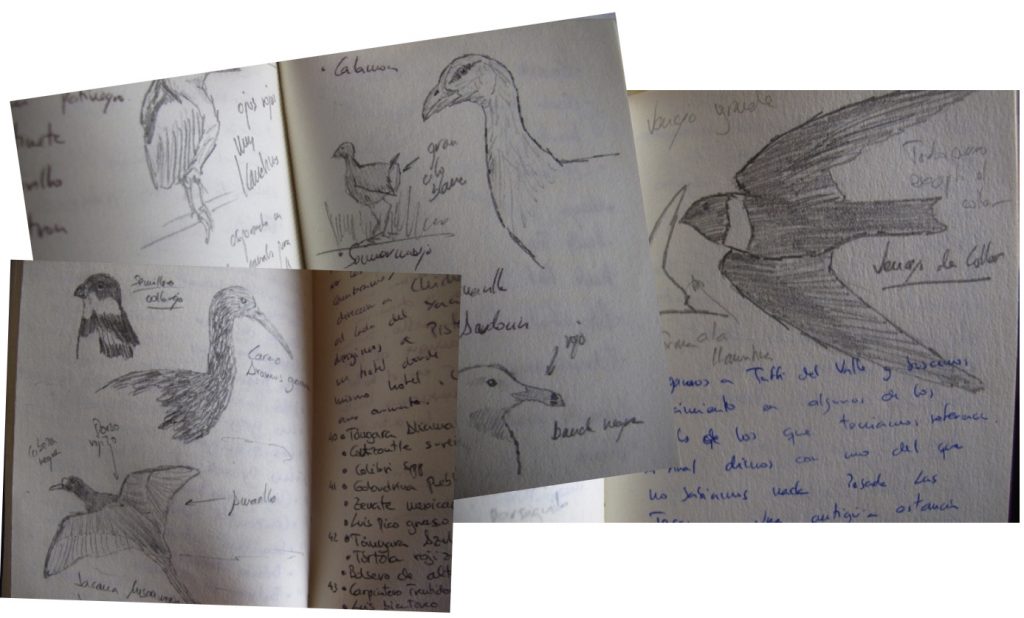
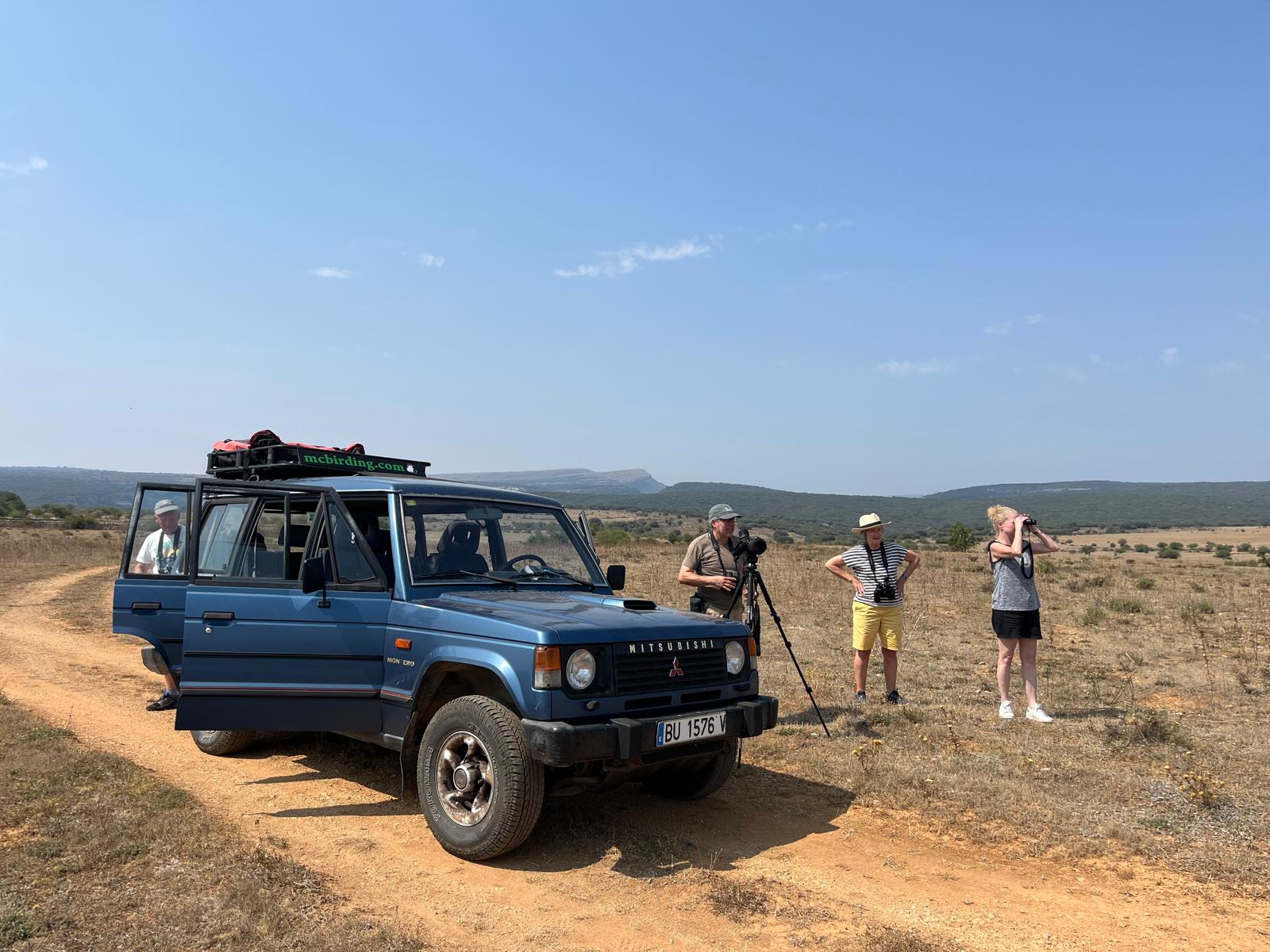
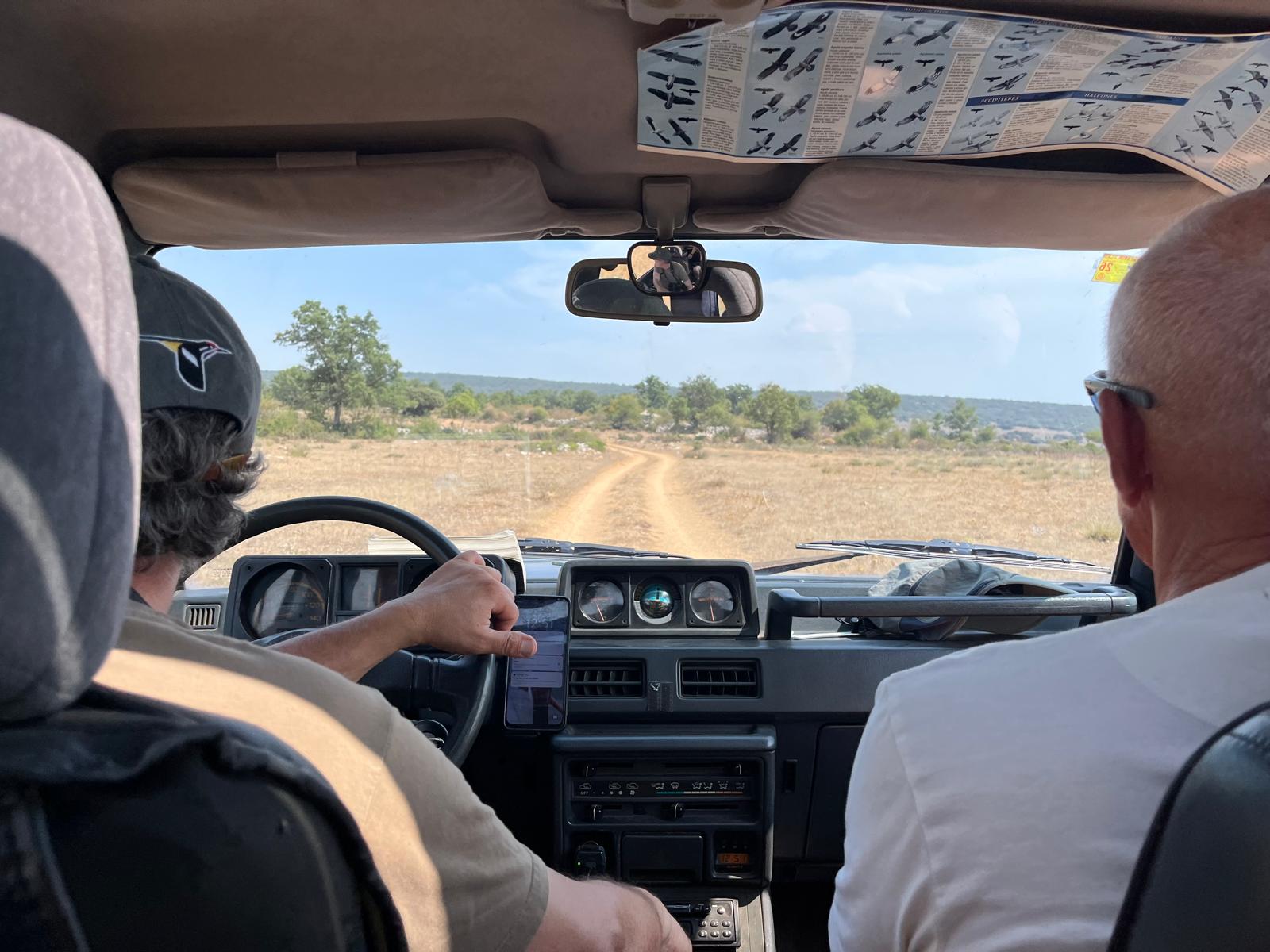
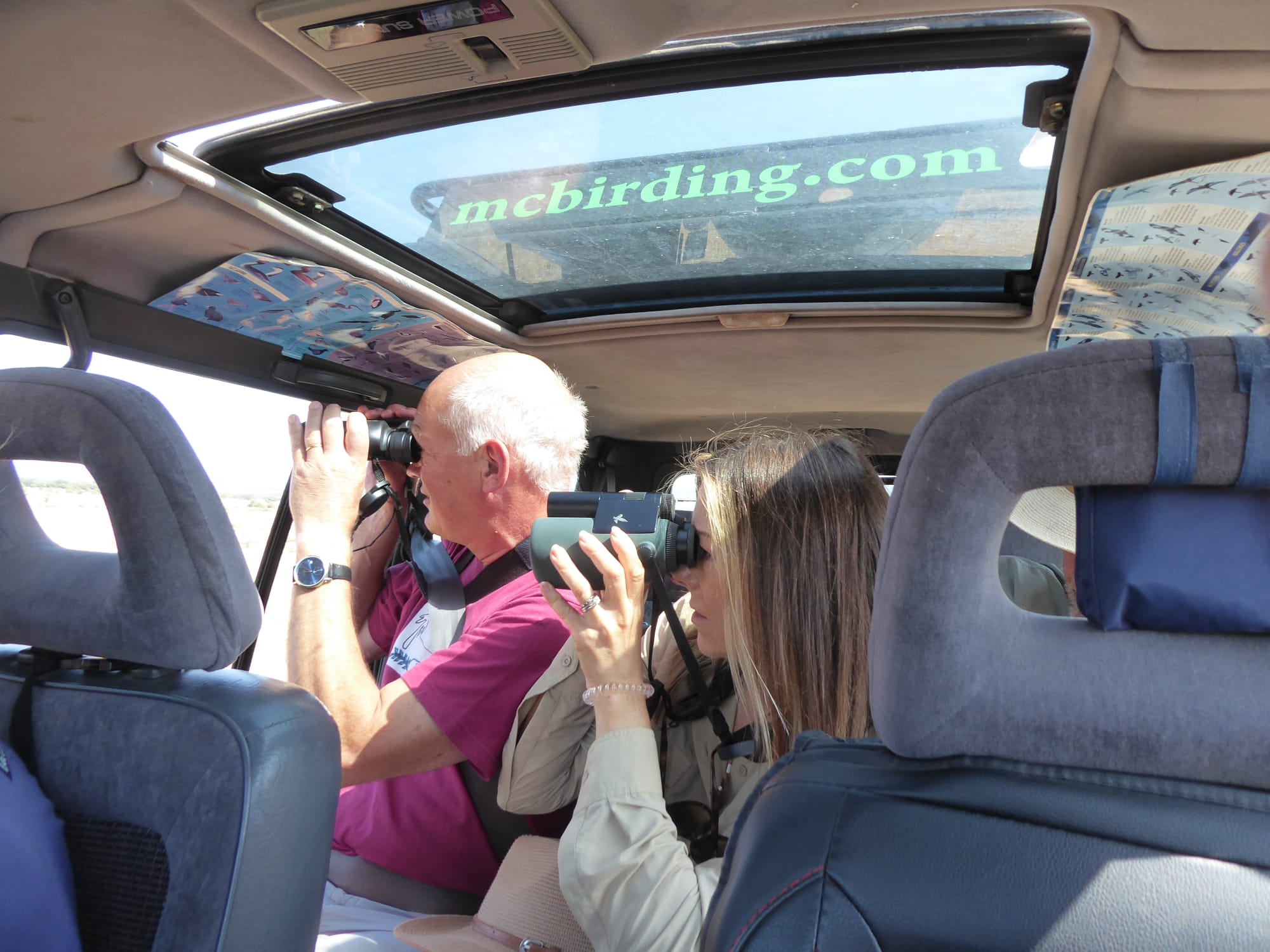
Las jornadas que rodearon al eclipse total de Sol del 12 de agosto de 2026 comenzaron mucho antes de que la Luna empezara a ocultar el Sol. Durante los días anteriores y posteriores disfrutamos de estupendas salidas de observación de aves, recorriendo algunos de los paisajes más característicos de nuestro entorno: valles, cañones, páramos y también una parte del embalse del Ebro.
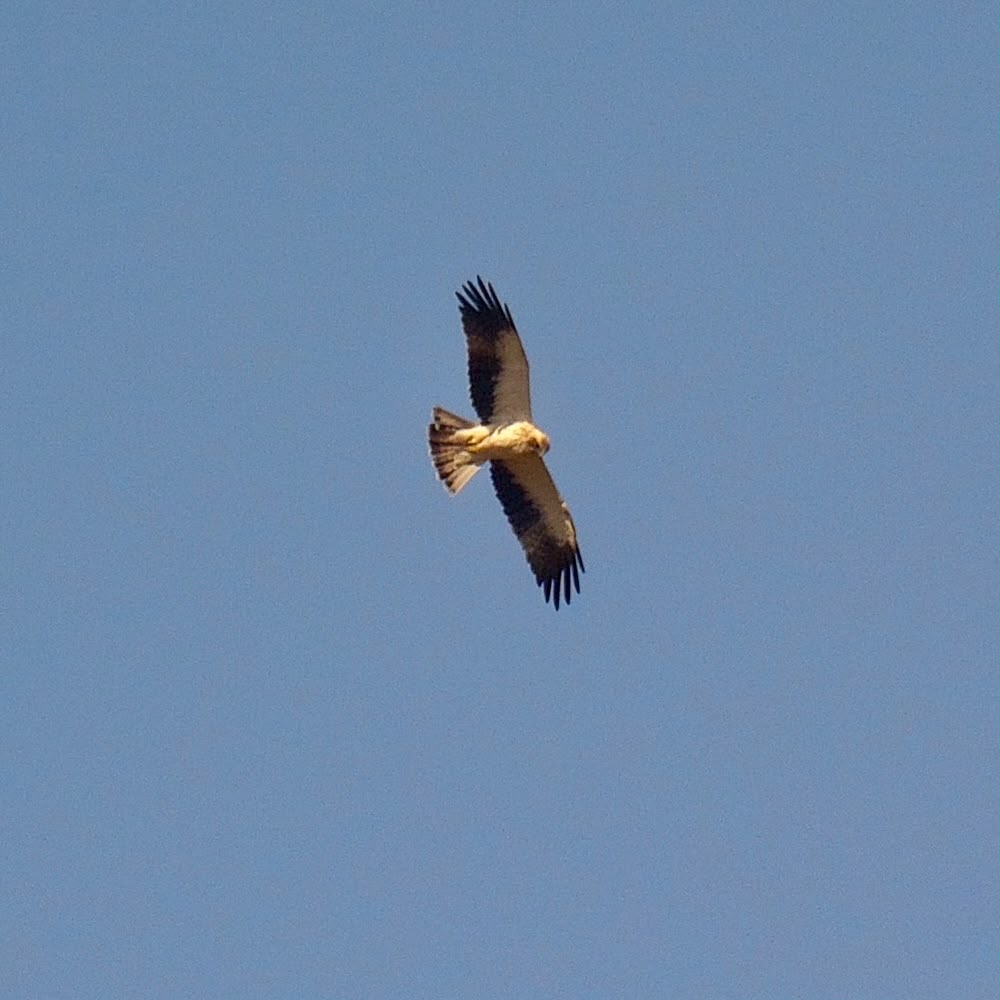
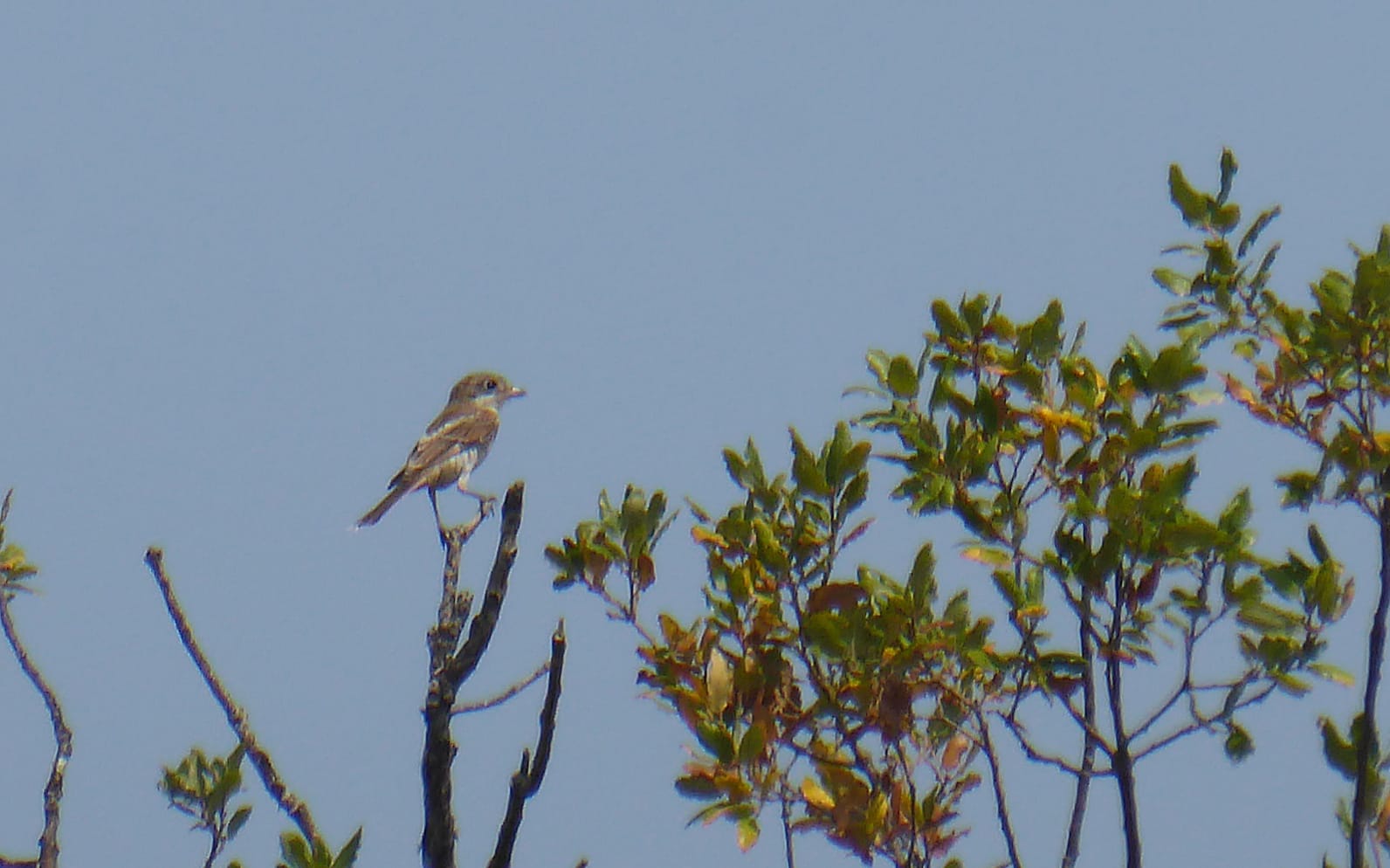
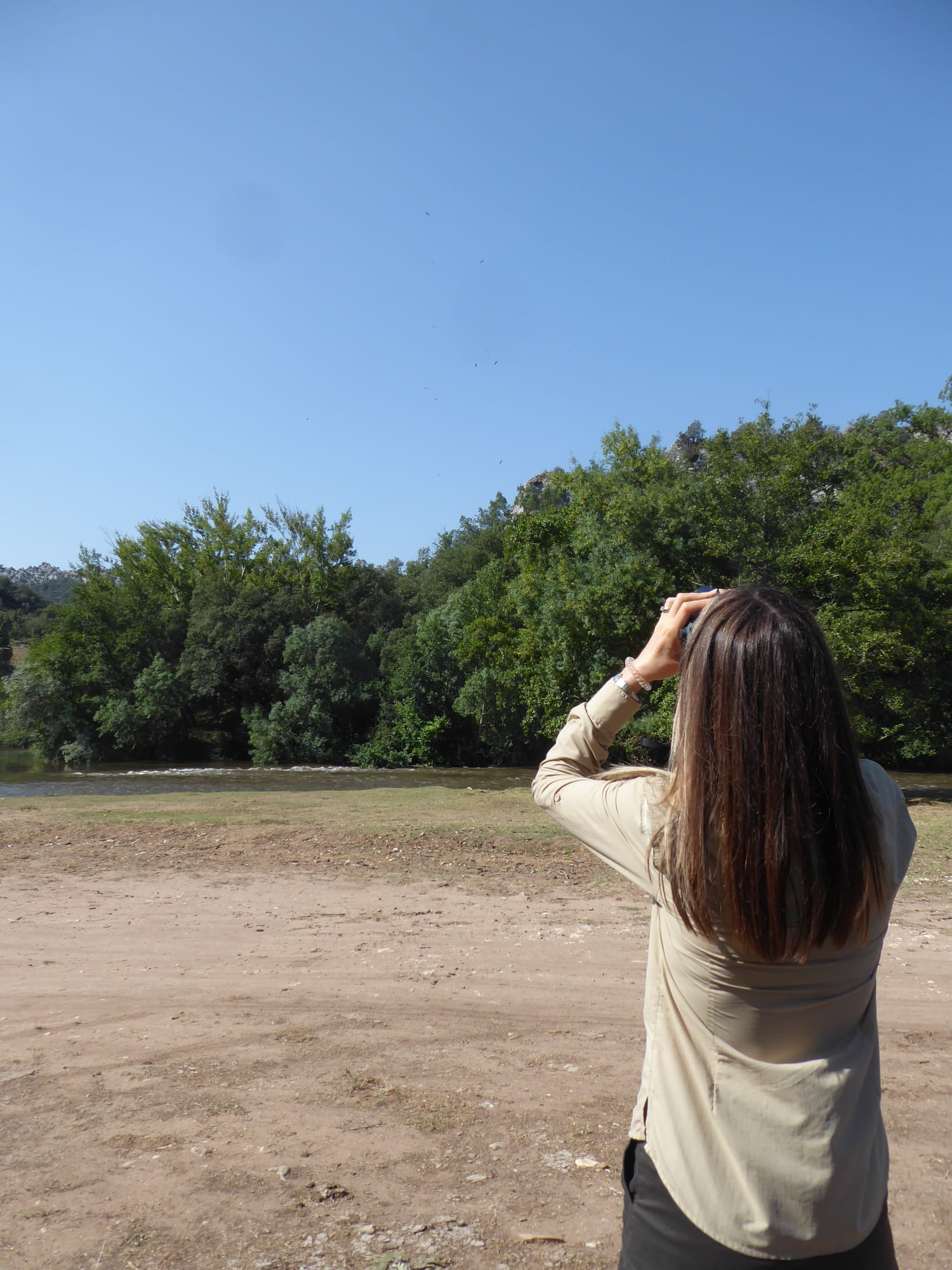
Fueron días muy completos, con un total de 54 especies de aves observadas, entre las que destacaron los tres alcaudones —alcaudón real, alcaudón dorsirrojo y alcaudón común— y varias especies de rapaces, como abejero europeo, busardo ratonero, alimoche, buitre leonado y águila calzada. En el embalse del Ebro pudimos disfrutar además de varios ejemplares inmaduros de garza imperial.
The days surrounding the total solar eclipse of 12 August 2026 began long before the Moon started to cover the Sun. In the days before and after the eclipse, we enjoyed some wonderful birdwatching outings, exploring some of the most characteristic landscapes around us: valleys, gorges, high plateaus and part of the Ebro Reservoir.
They were very rewarding days, with a total of 54 bird species recorded, including the three shrikes —Woodchat Shrike, Red-backed Shrike and Iberian Grey Shrike— as well as several birds of prey, such as European Honey-buzzard, Common Buzzard, Egyptian Vulture, Griffon Vulture and Short-toed Snake Eagle. At the Ebro Reservoir, we also had the opportunity to see several immature Purple Herons.
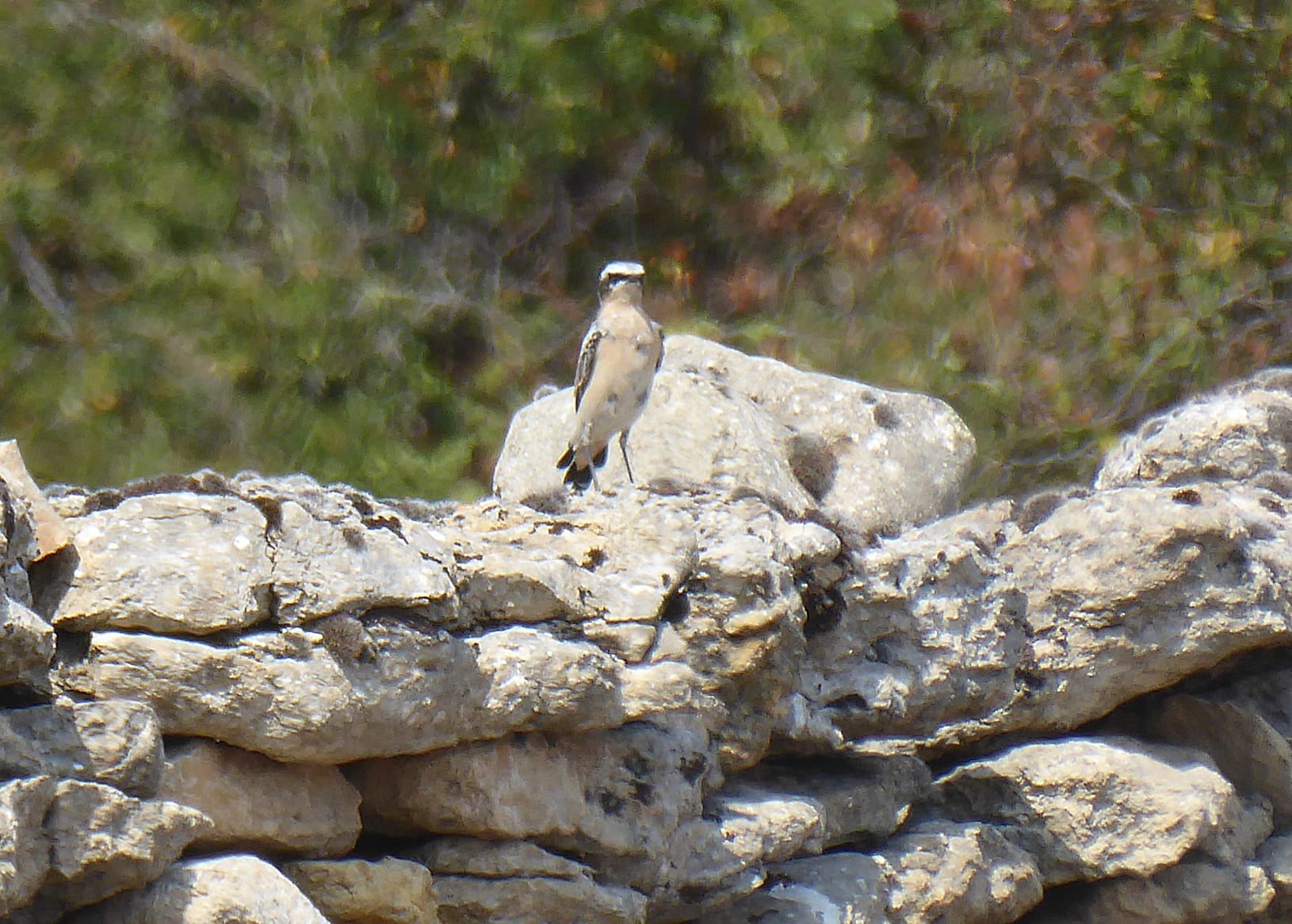
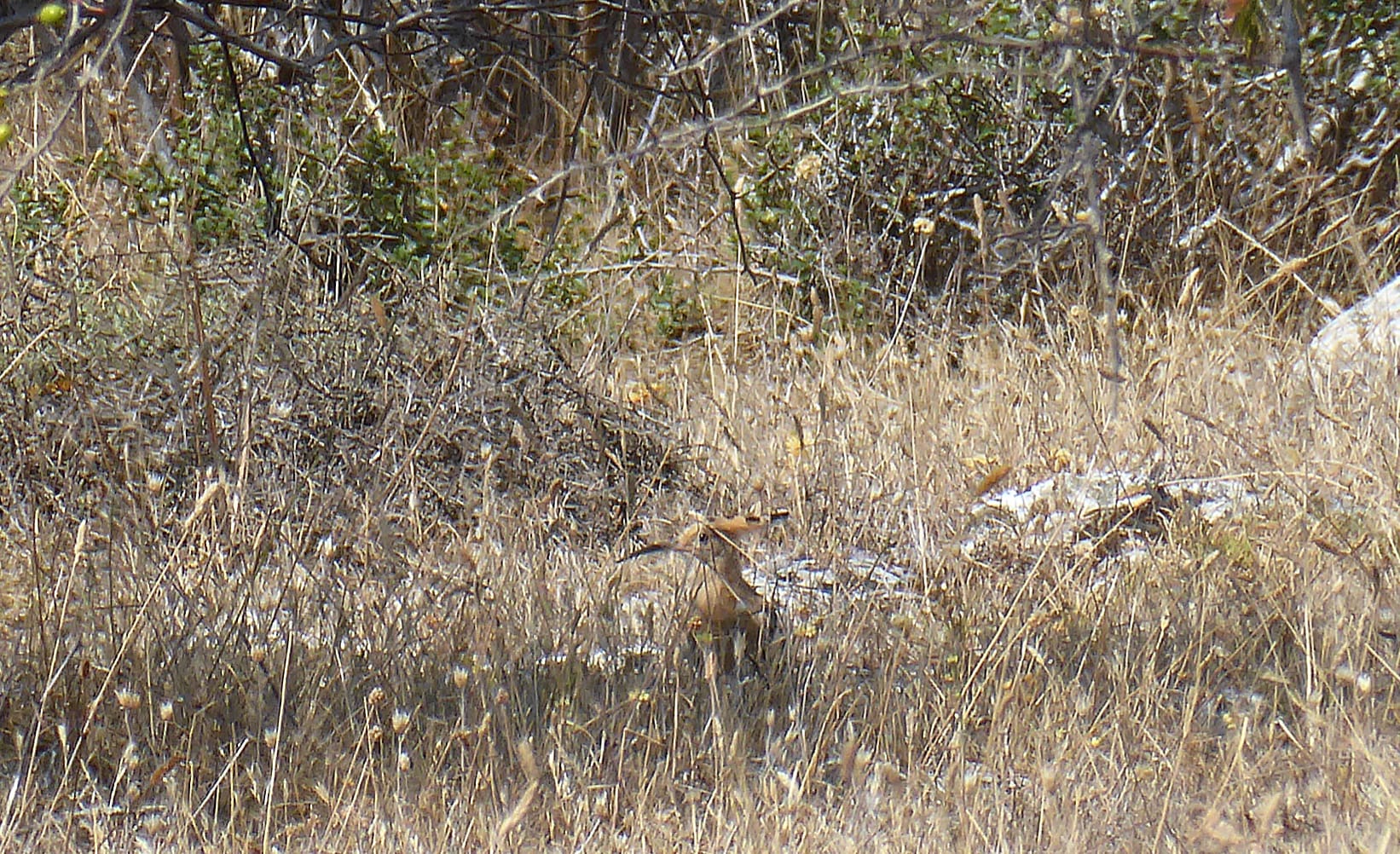
Y, entre todas estas observaciones, esperaba el gran acontecimiento: el eclipse total de Sol del 12 de agosto de 2026.
And among all these birdwatching highlights came the great event we had been waiting for: the total solar eclipse of 12 August 2026.
Preparando el gran día / Preparing for the Big Day
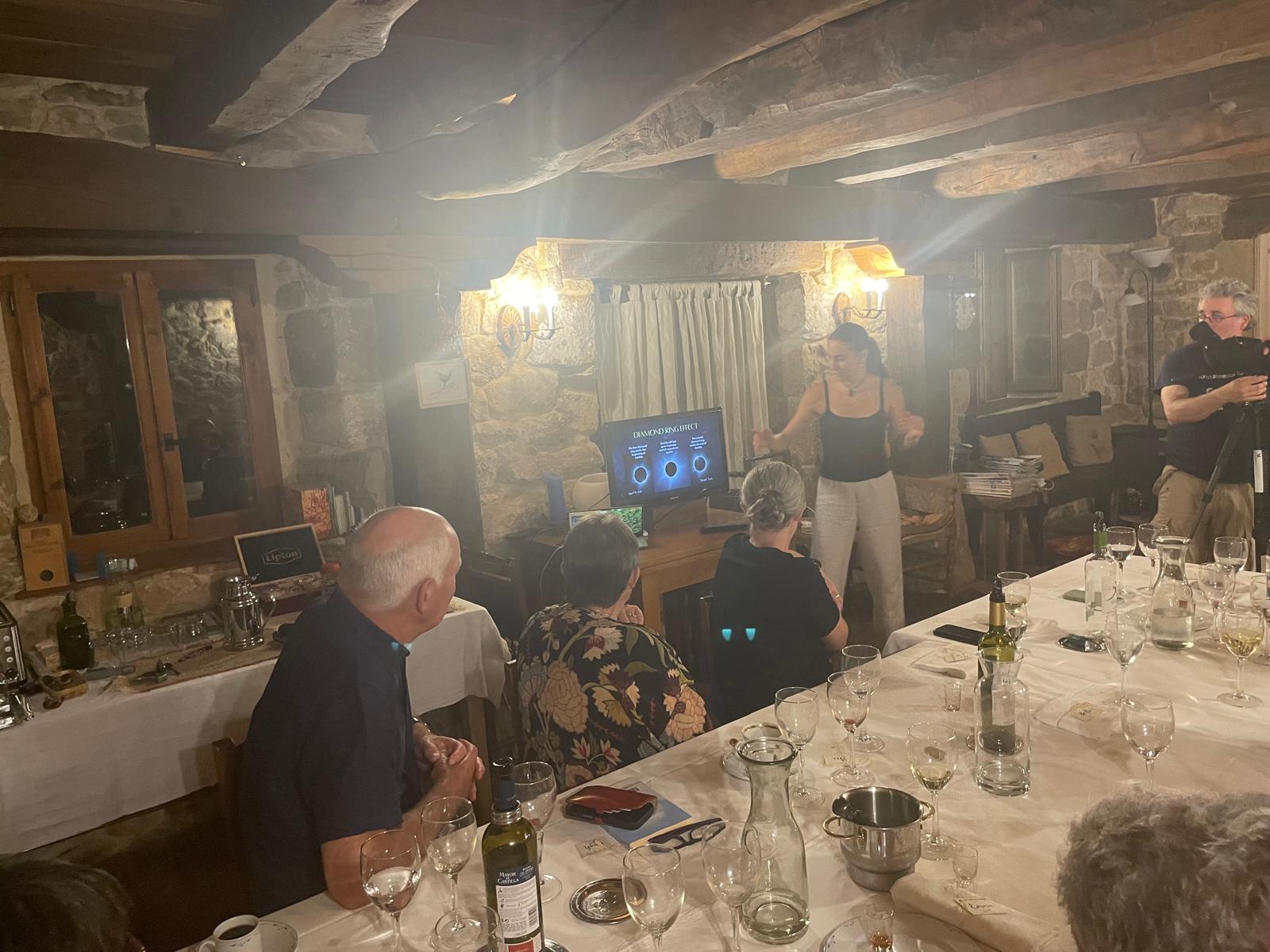
Nuestros participantes llegaron principalmente desde Gran Bretaña, Madrid y Francia, y durante los días previos fuimos preparando con cuidado la jornada. Una parte importante de esa preparación fue explicar qué íbamos a poder observar durante las distintas fases del eclipse y, sobre todo, insistir en las medidas de seguridad necesarias para observar el Sol.
La tarde del día 12, alrededor de las 4:30, ya teníamos cargado el vehículo con todo el material. Nuestro destino era Peña Nava, a 1.077 metros de altitud, el lugar que habíamos elegido para disfrutar del eclipse.
Our participants came mainly from Great Britain, Madrid and France, and during the days beforehand we carefully prepared for the big event. Part of this preparation involved explaining what we could expect to see during the different phases of the eclipse and, above all, going through the essential safety precautions for solar observation.
At around 4:30 pm on 12 August, we had loaded the vehicle with all the equipment and were ready to go. Our destination was Peña Nava, at 1,077 metres above sea level, the location we had chosen for the eclipse.
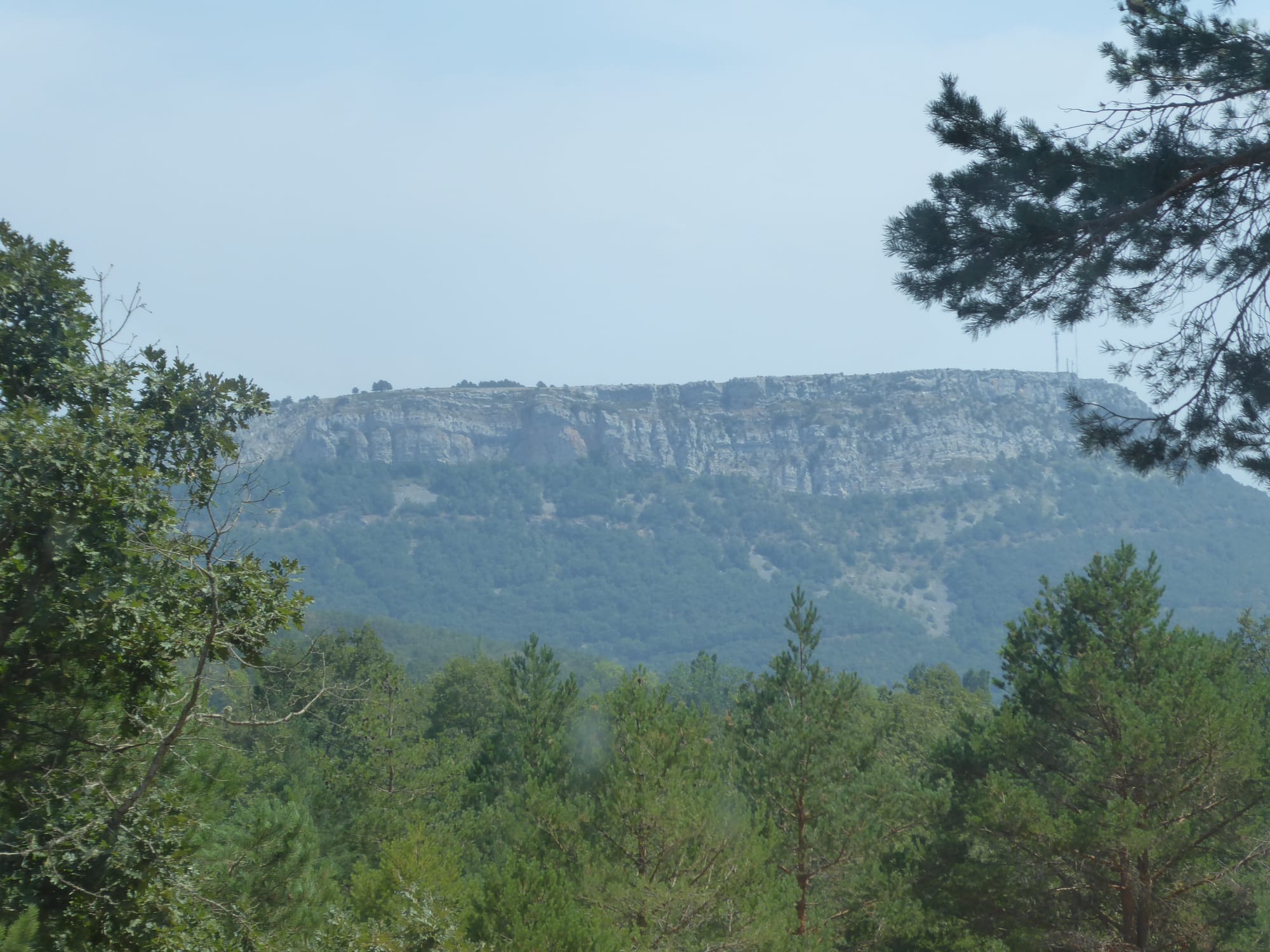
La idea inicial era acceder caminando desde la Posada, en un recorrido de unos 5,5 kilómetros, pero el intenso calor de aquella tarde nos hizo cambiar de planes y decidimos subir en vehículo.
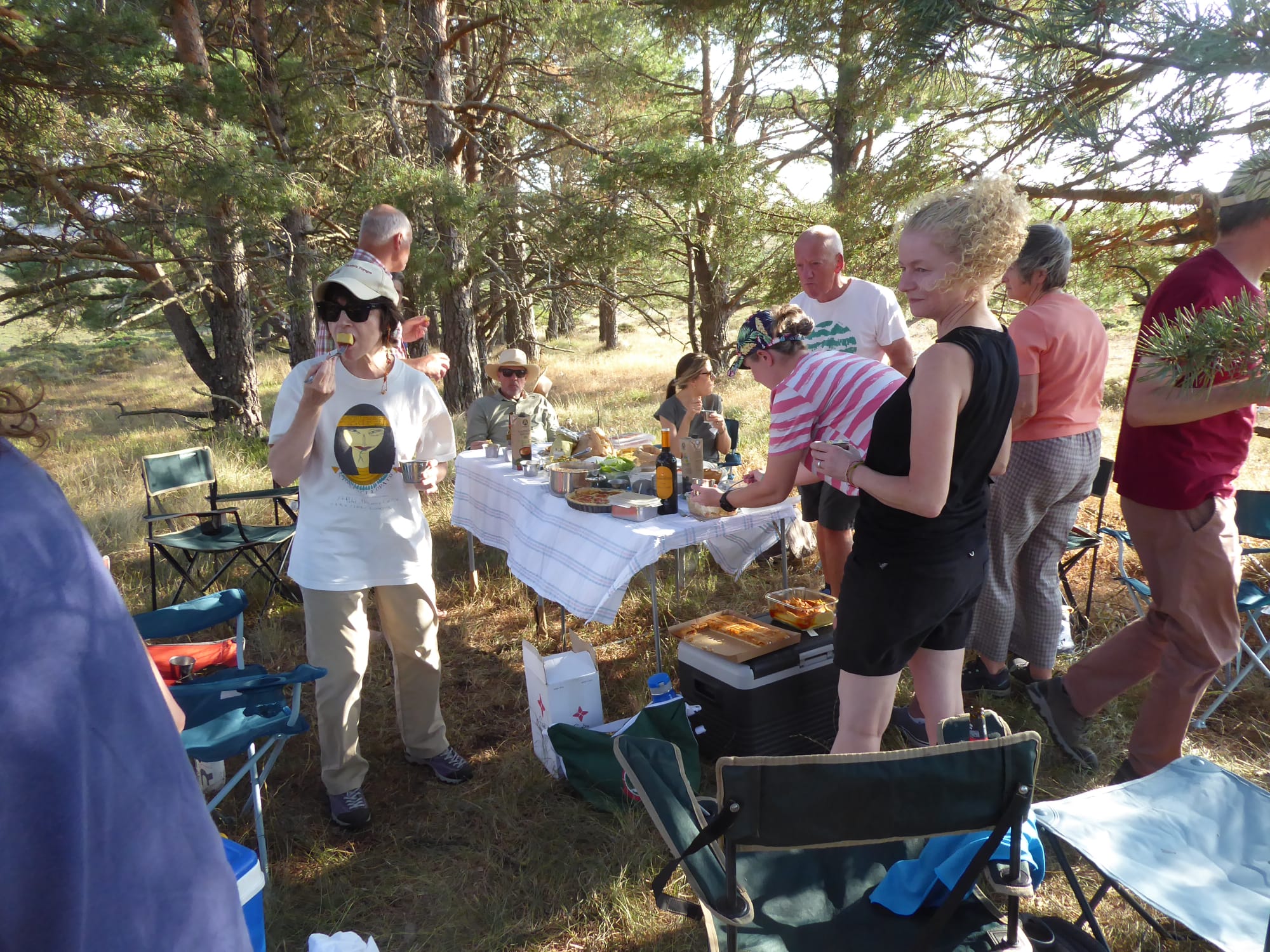
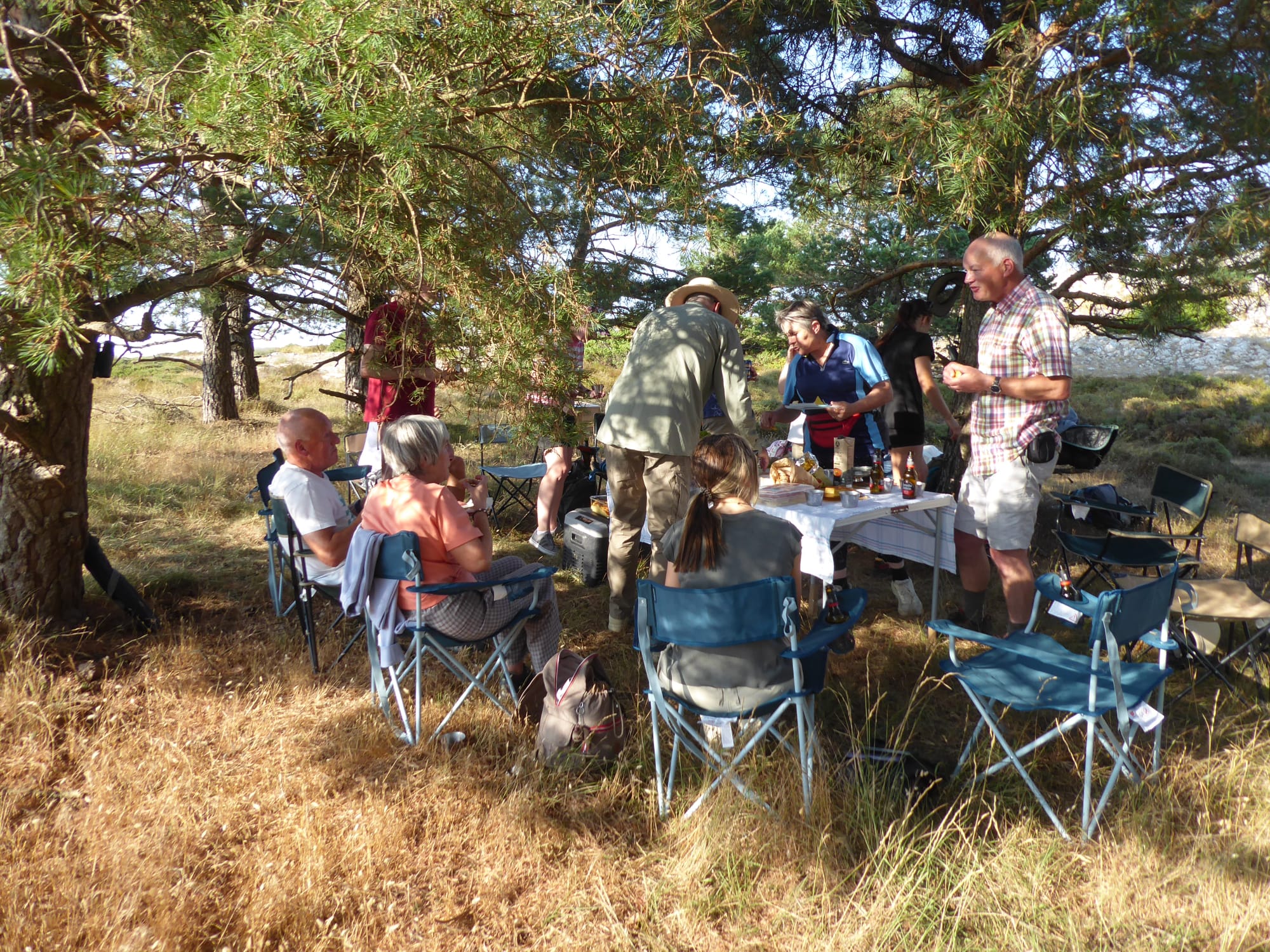
Una vez arriba, encontramos en el pequeño pinar un lugar perfecto para protegernos del sol. Allí disfrutamos tranquilamente de un amplio picnic que, además, hacía las veces de cena, ya que durante las horas centrales del eclipse estaríamos completamente concentrados en la observación.
Afortunadamente, en Peña Nava soplaba un viento (más que una simple brisa) que hacía mucho más llevadero el calor.
Our original plan had been to walk there from the Posada, a route of around 5.5 kilometres, but the intense heat that afternoon made us change our plans, and we decided to drive up instead.
Once there, the small pine woodland provided the perfect shelter from the sun. We enjoyed a generous picnic, which also served as our dinner, since during the most important part of the evening we would be completely absorbed in observing the eclipse.
Fortunately, a fairly strong wind was blowing at Peña Nava (more than just a breeze) making the heat much more bearable.
Las últimas horas antes del eclipse / The Final Hours Before the Eclipse
La espera también tuvo su recompensa para los aficionados a las aves. En las inmediaciones había una cercana colonia de vencejo real, que nos permitió observar hasta 15 ejemplares. También pudimos registrar durante esta primera parte de la tarde especies como culebrera europea, busardo ratonero, cernícalo vulgar y tarabilla europea.
Mientras tanto, el cielo se mantenía despejado. Desde media tarde algunas nubes de evolución habían empezado a aparecer y, durante un rato, llegaron a hacernos temer que pudieran estropear el momento más esperado.
Pero finalmente se disiparon, tal y como había anticipado el que probablemente sea el mejor conocedor de la meteorología de nuestra comarca, MeteoMerindades.
The waiting time also provided some excellent birdwatching. A nearby colony of Alpine Swifts allowed us to see up to 15 birds. We also recorded species such as Short-toed Snake Eagle, Common Buzzard, Common Kestrel and European Stonechat during the first part of the afternoon.
Meanwhile, the sky remained clear. From mid-afternoon, a few developing clouds began to appear and, for a while, they made us slightly nervous. Could they spoil the most eagerly awaited moment of the day?
Fortunately, they eventually disappeared, just as predicted by the person who is probably the best local weather forecaster in our area, MeteoMerindades.
MeteoMerindades – El Tiempo en Merindades
19:38: comienza el eclipse / 7:38 pm: The Eclipse Begins
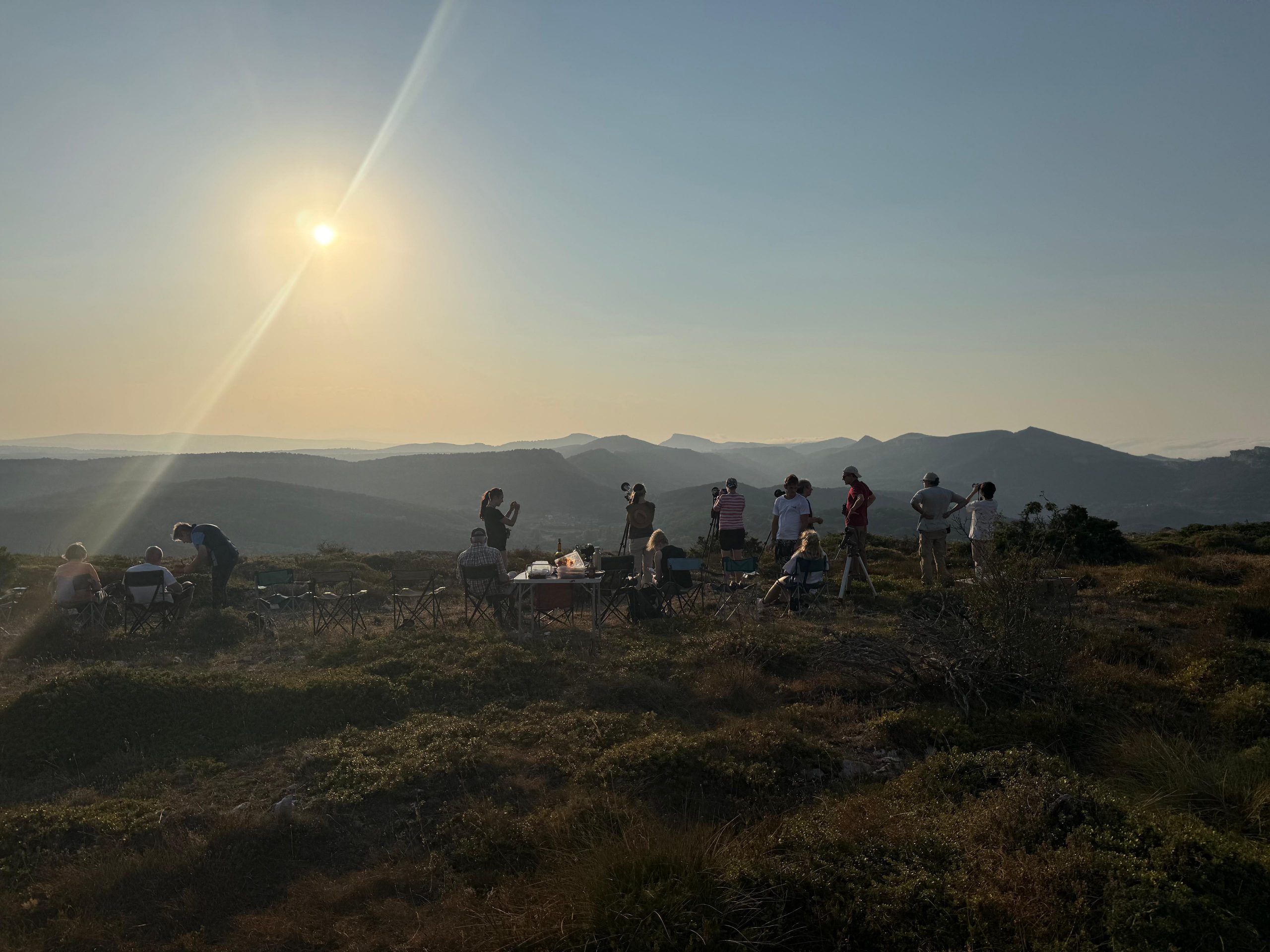
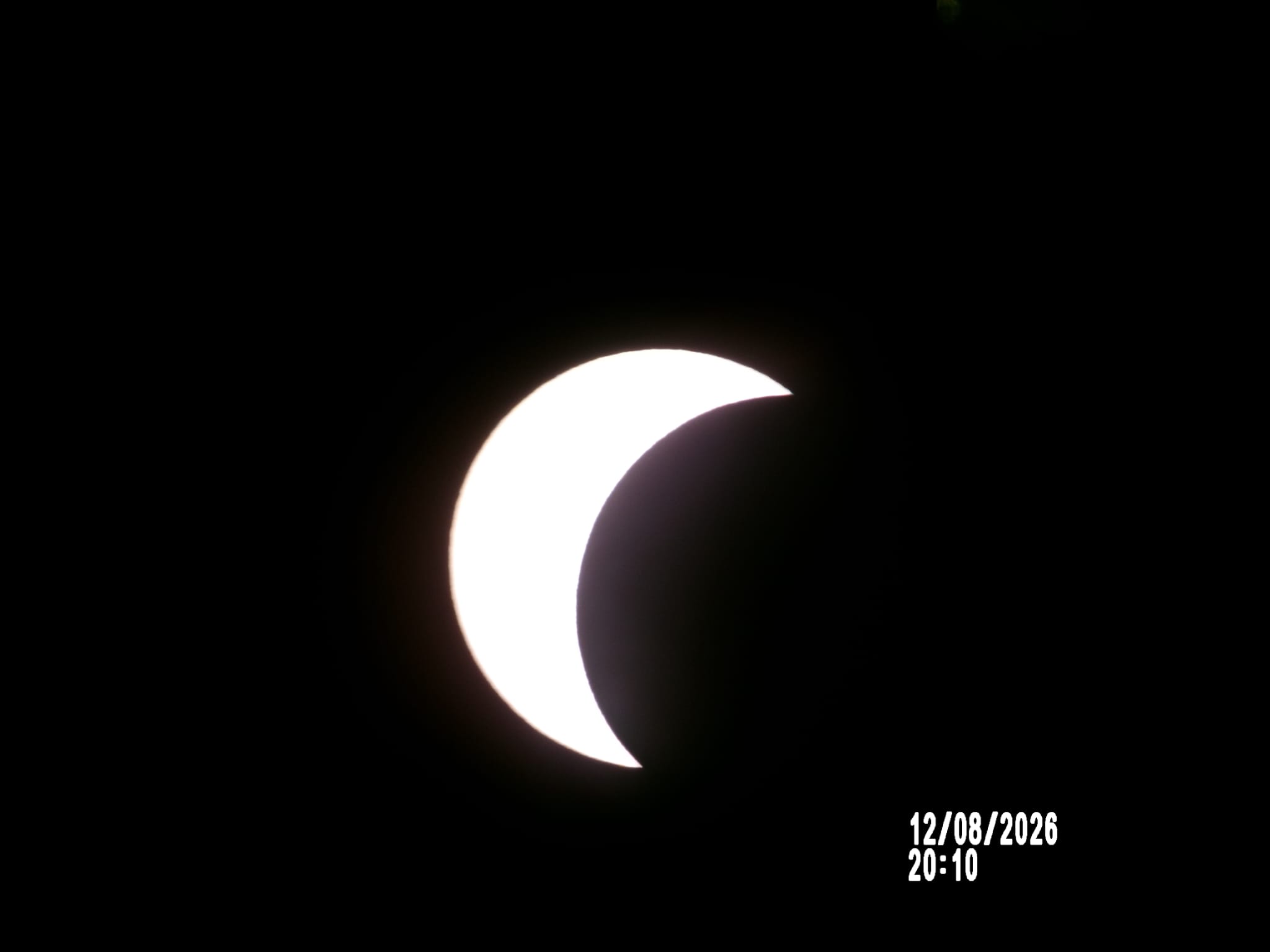
Con puntualidad astronómica, a las 19:38, la Luna comenzó a ocultar el Sol.
With astronomical punctuality, at 7:38 pm, the Moon began to move across the face of the Sun.
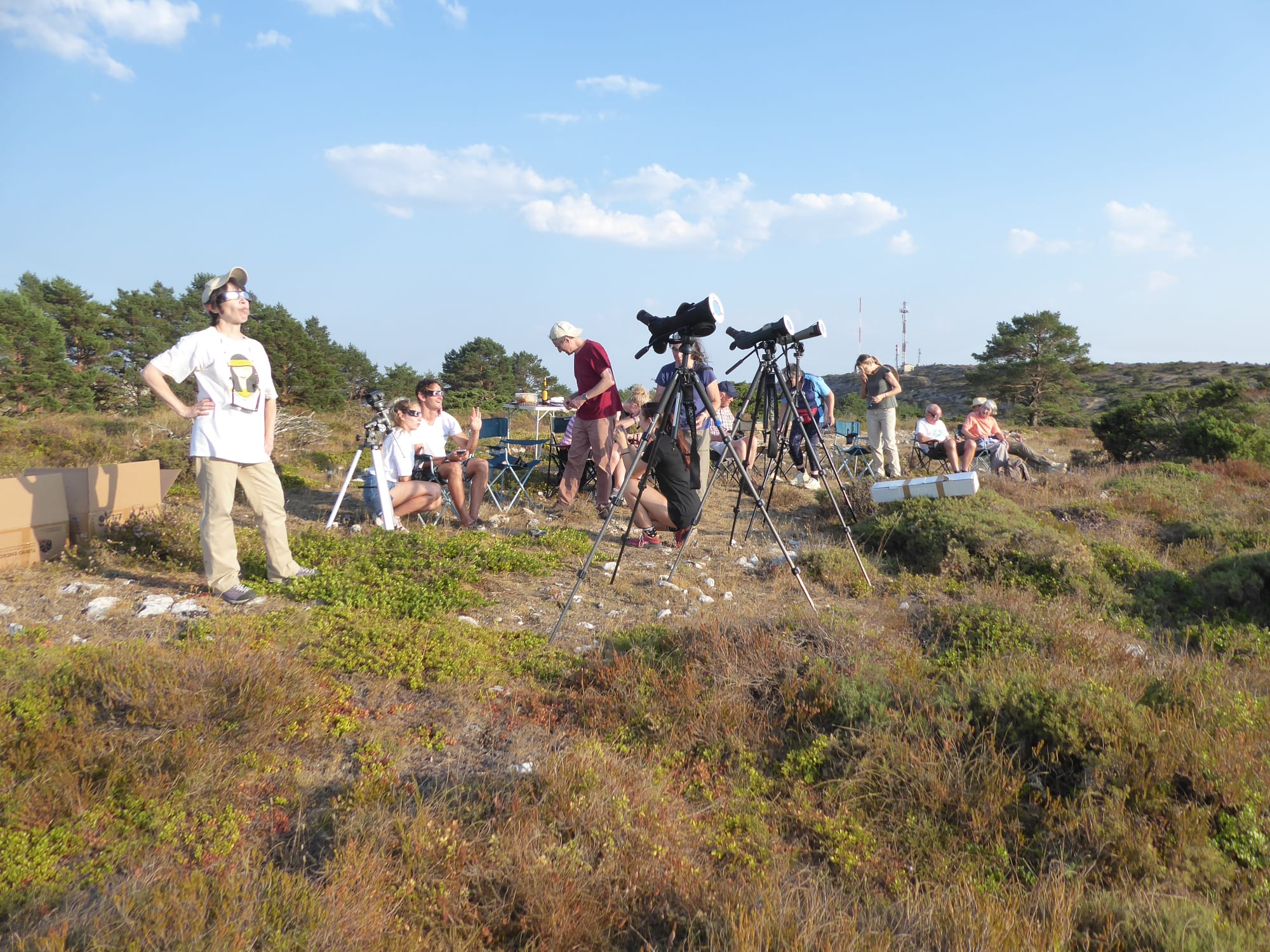
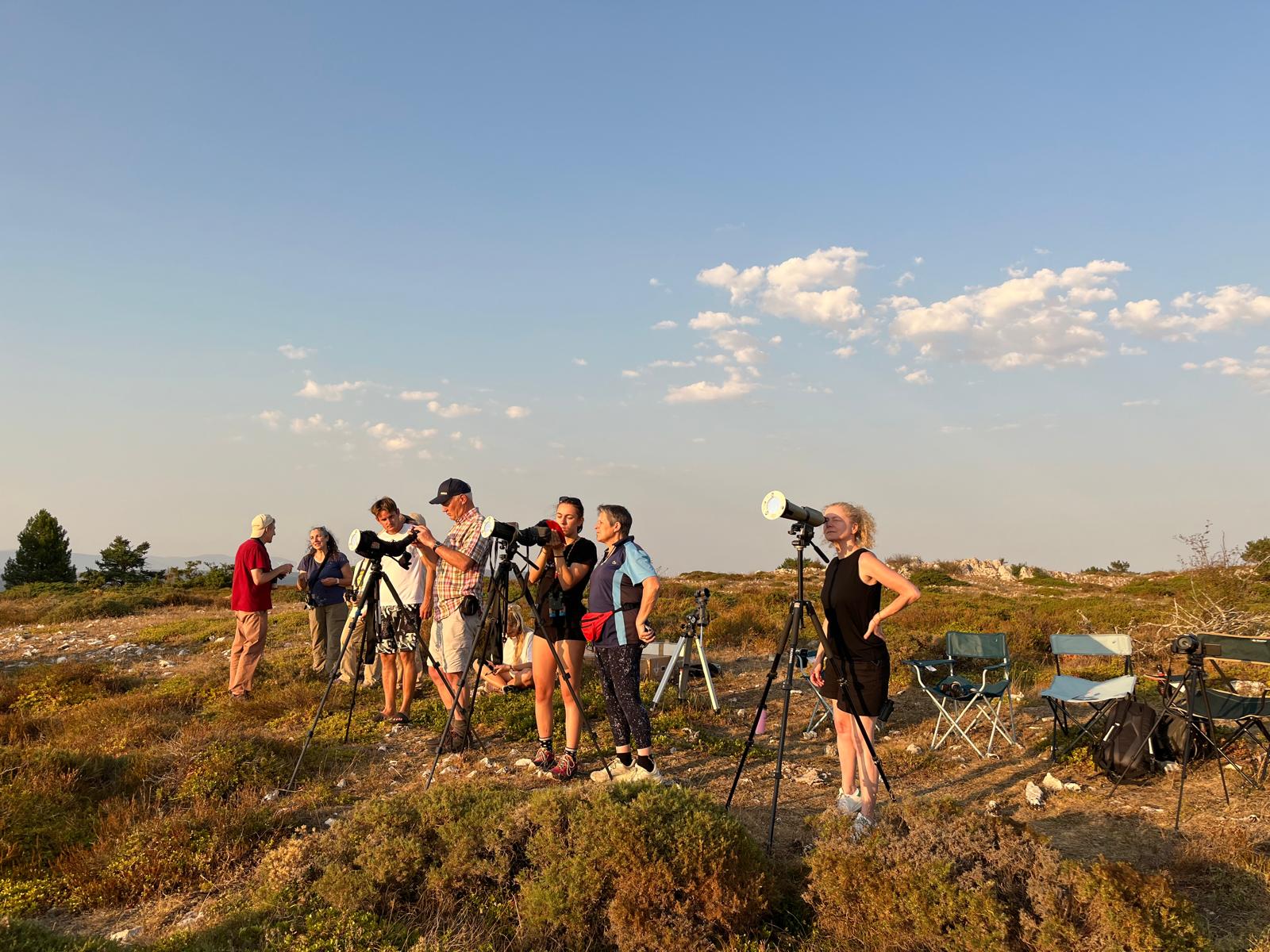

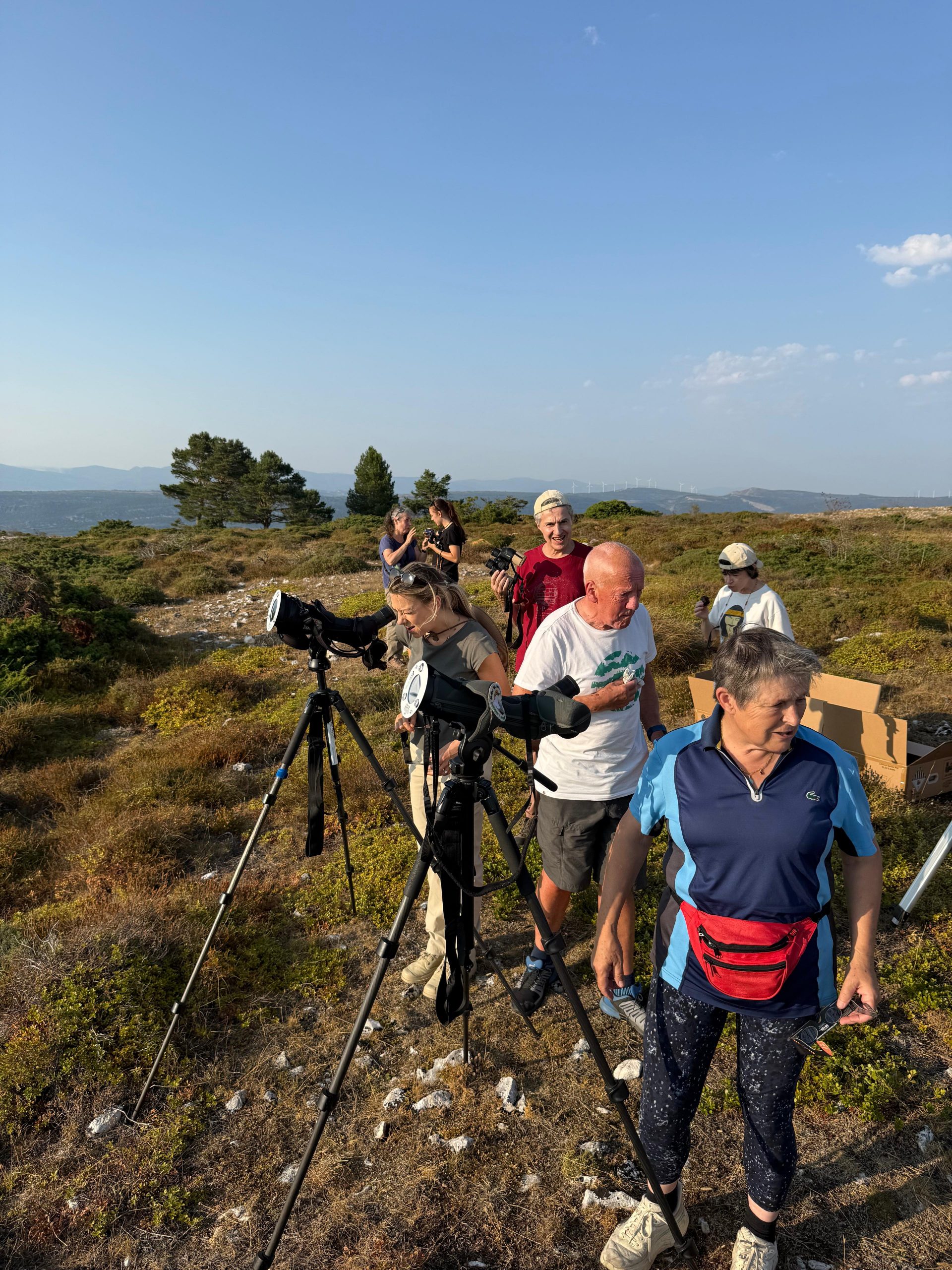
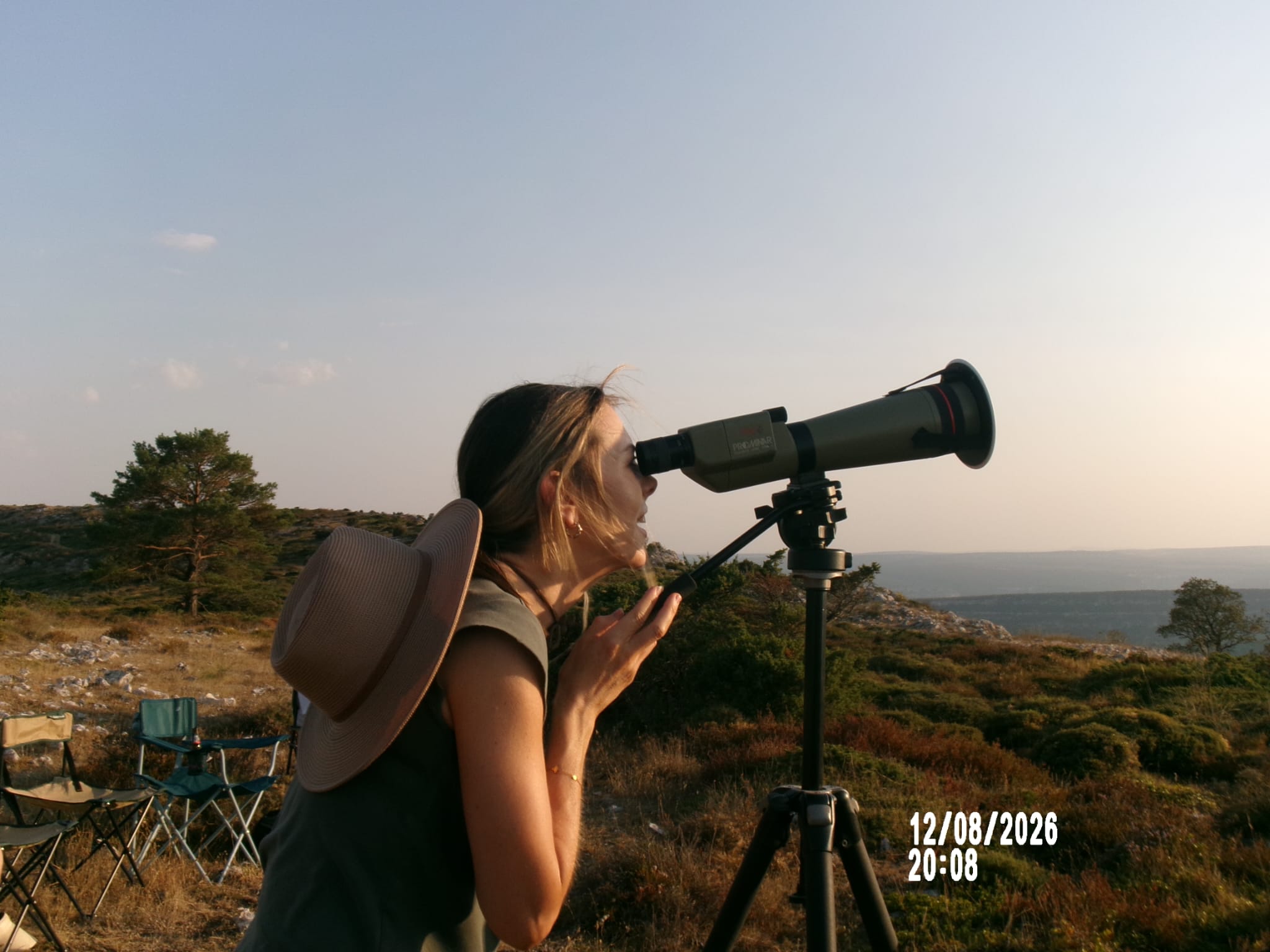
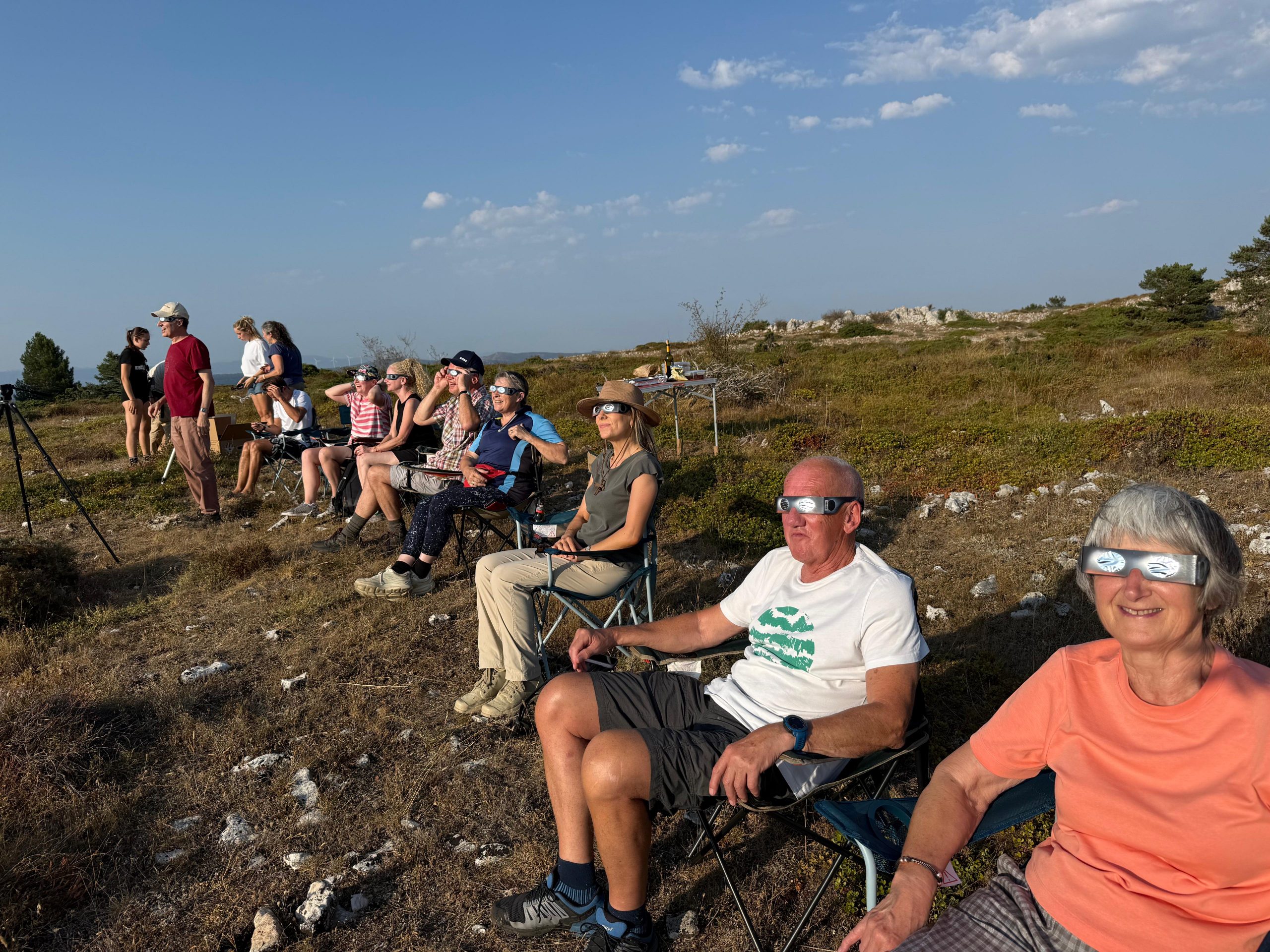
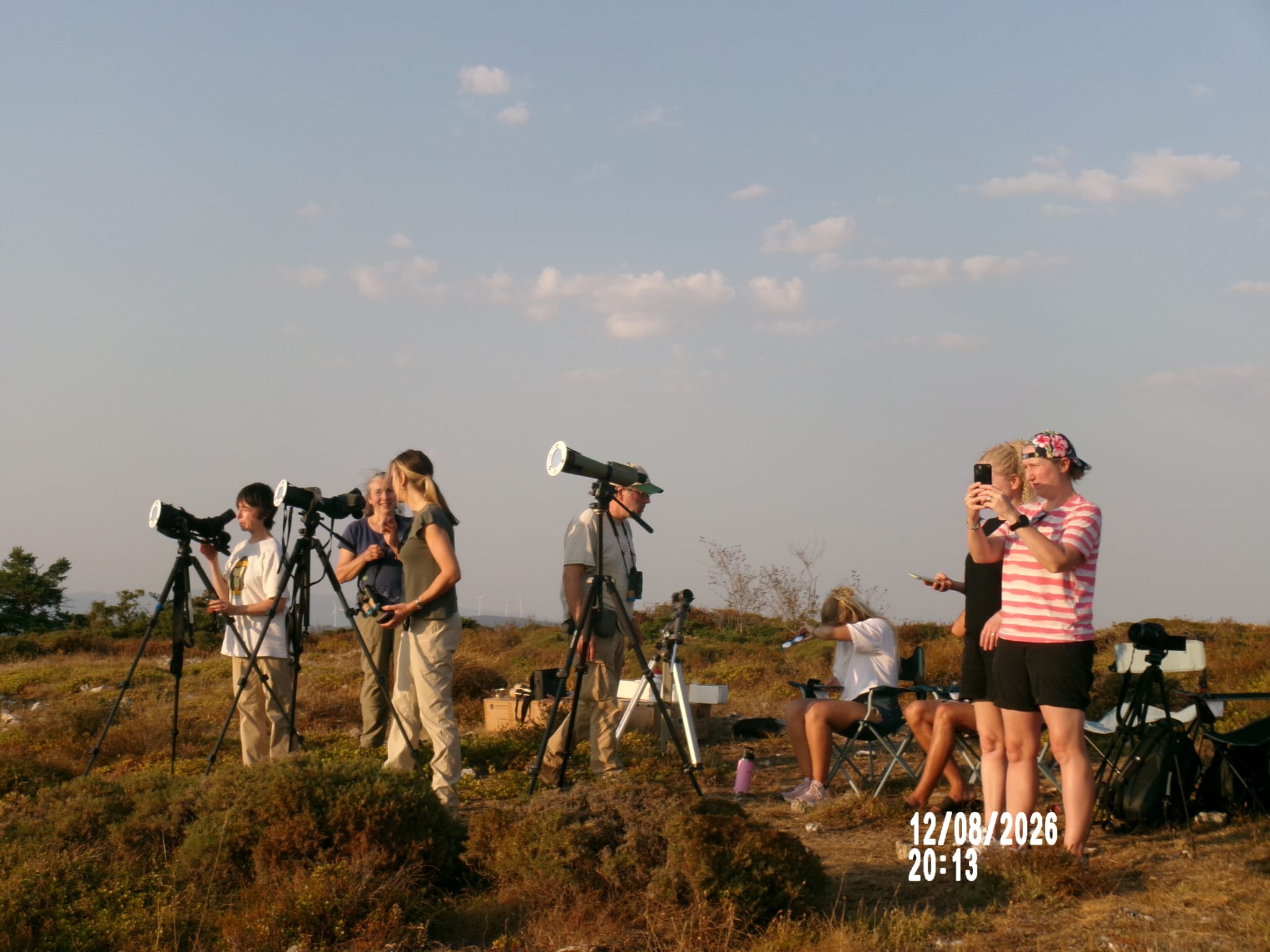
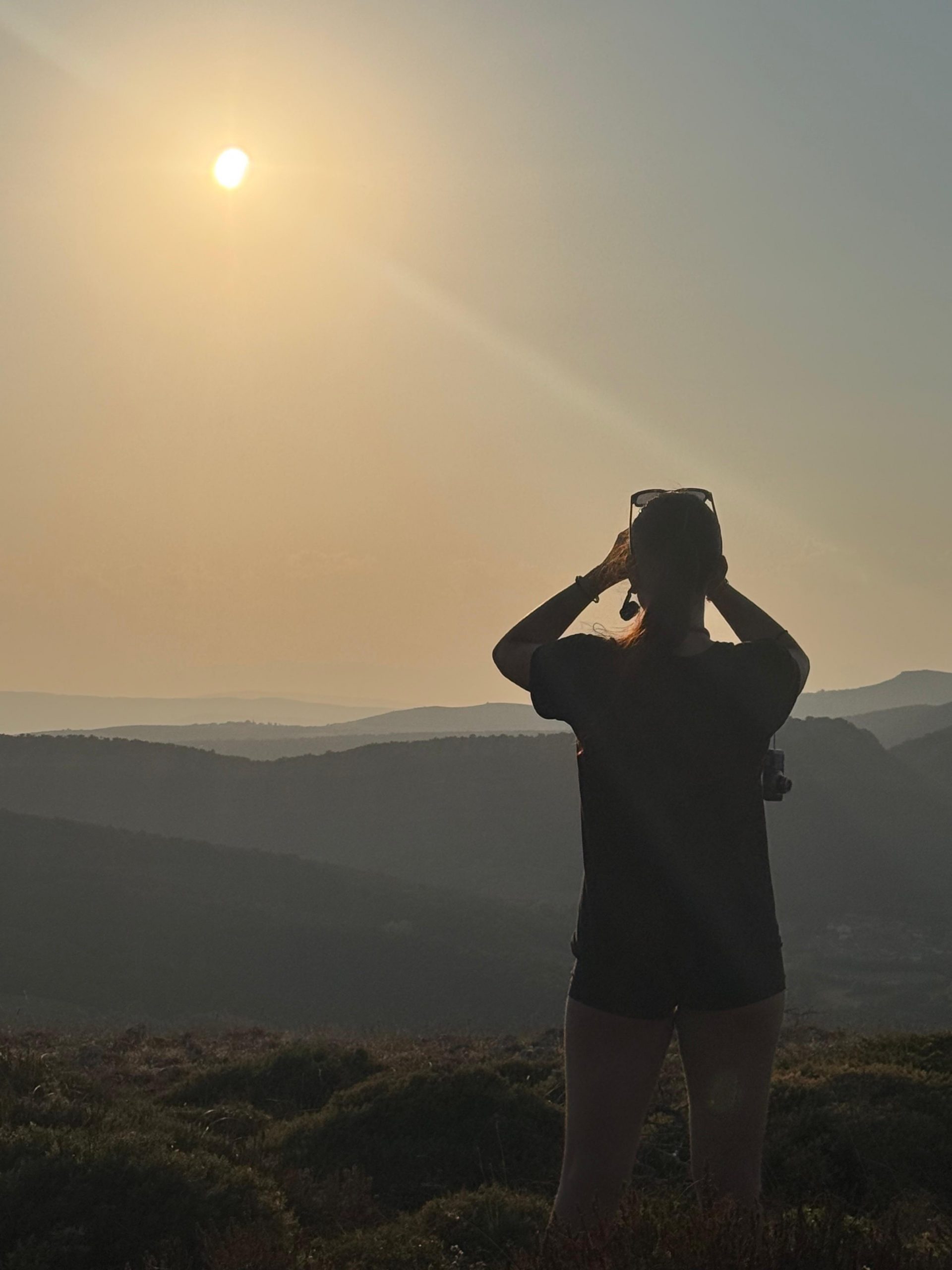
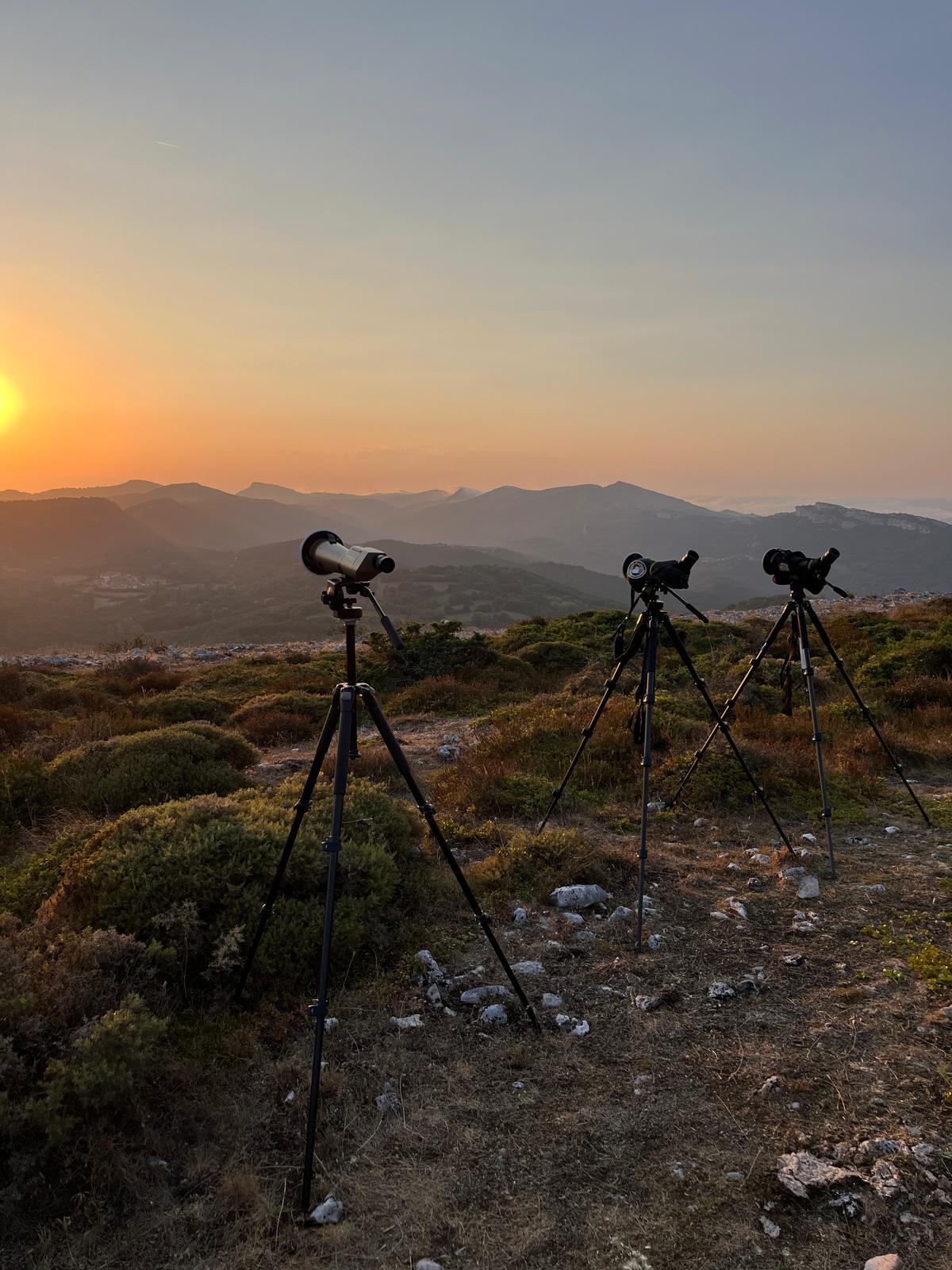
Llegábamos quizá un poco justos de tiempo, pero finalmente todos estábamos colocados y con el material preparado en el que difícilmente podíamos haber encontrado un escenario mejor: vistas espectaculares, horizonte abierto y un cielo completamente despejado.
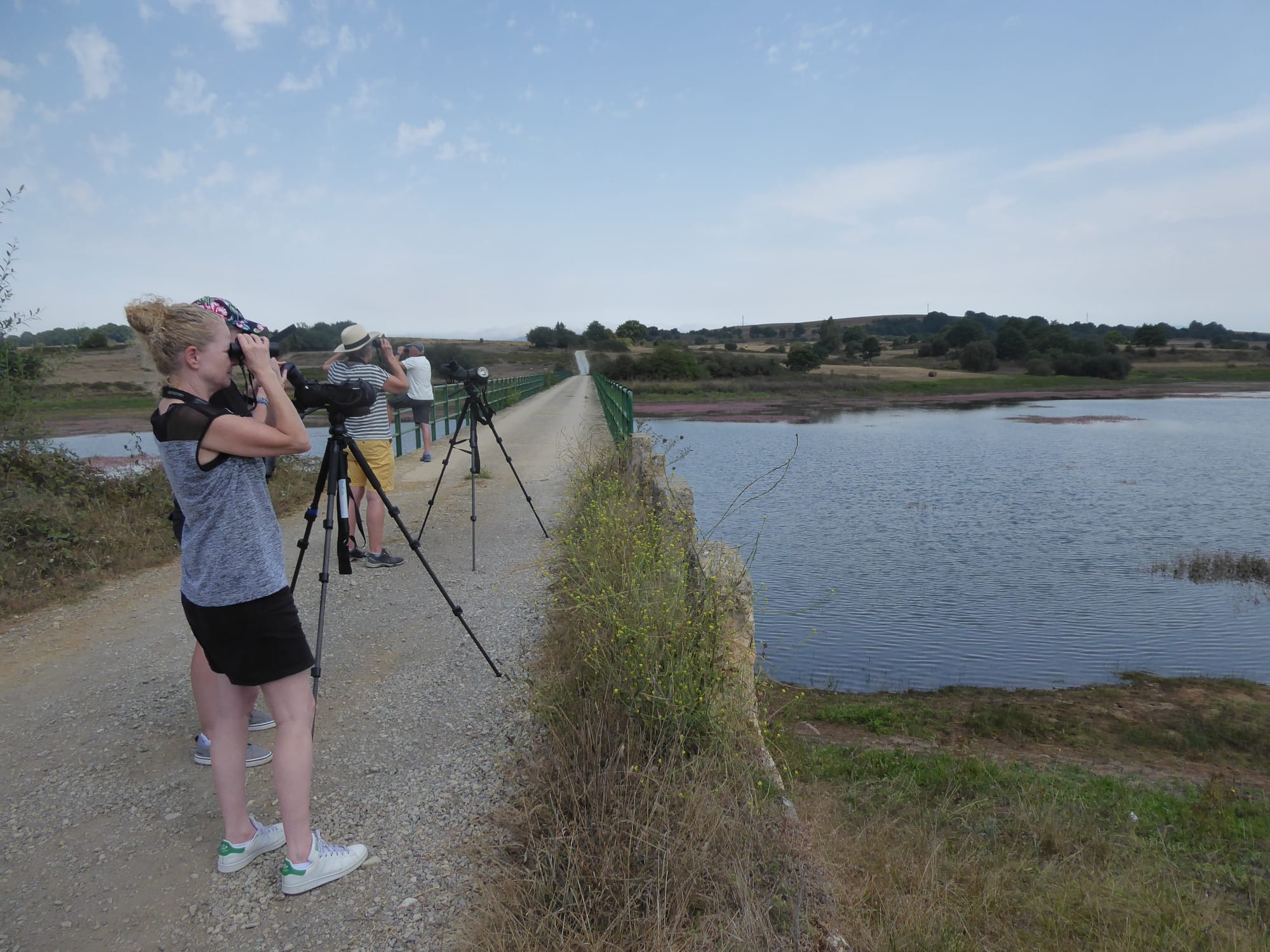
Las gafas estaban preparadas. Los telescopios, montados. Los prismáticos, listos. Todo el material de observación estaba equipado con sus correspondientes filtros Baader AstroSolar®, de manera que pudimos observar el Sol con total seguridad.
A través de los prismáticos y telescopios, el Sol ofrecía una imagen extraordinaria, con sus manchas solares perfectamente visibles. Poco a poco, el disco lunar fue avanzando sobre él hasta que la Luna terminó por ocultarlo completamente.
We were perhaps a little short of time, but in the end everyone was in position and all the equipment was ready. We could hardly have asked for a better setting: spectacular views, an open horizon and a completely clear sky.
The solar glasses were ready. The telescopes were set up. The binoculars were prepared. All our observing equipment was fitted with the appropriate Baader AstroSolar® filters, allowing us to observe the Sun safely throughout the partial phases.
Through the binoculars and telescopes, the Sun offered a remarkable view, with its sunspots clearly visible. Slowly, the Moon advanced across the solar disc until it finally covered it completely.
20:33: la totalidad / 8:33 pm: Totality
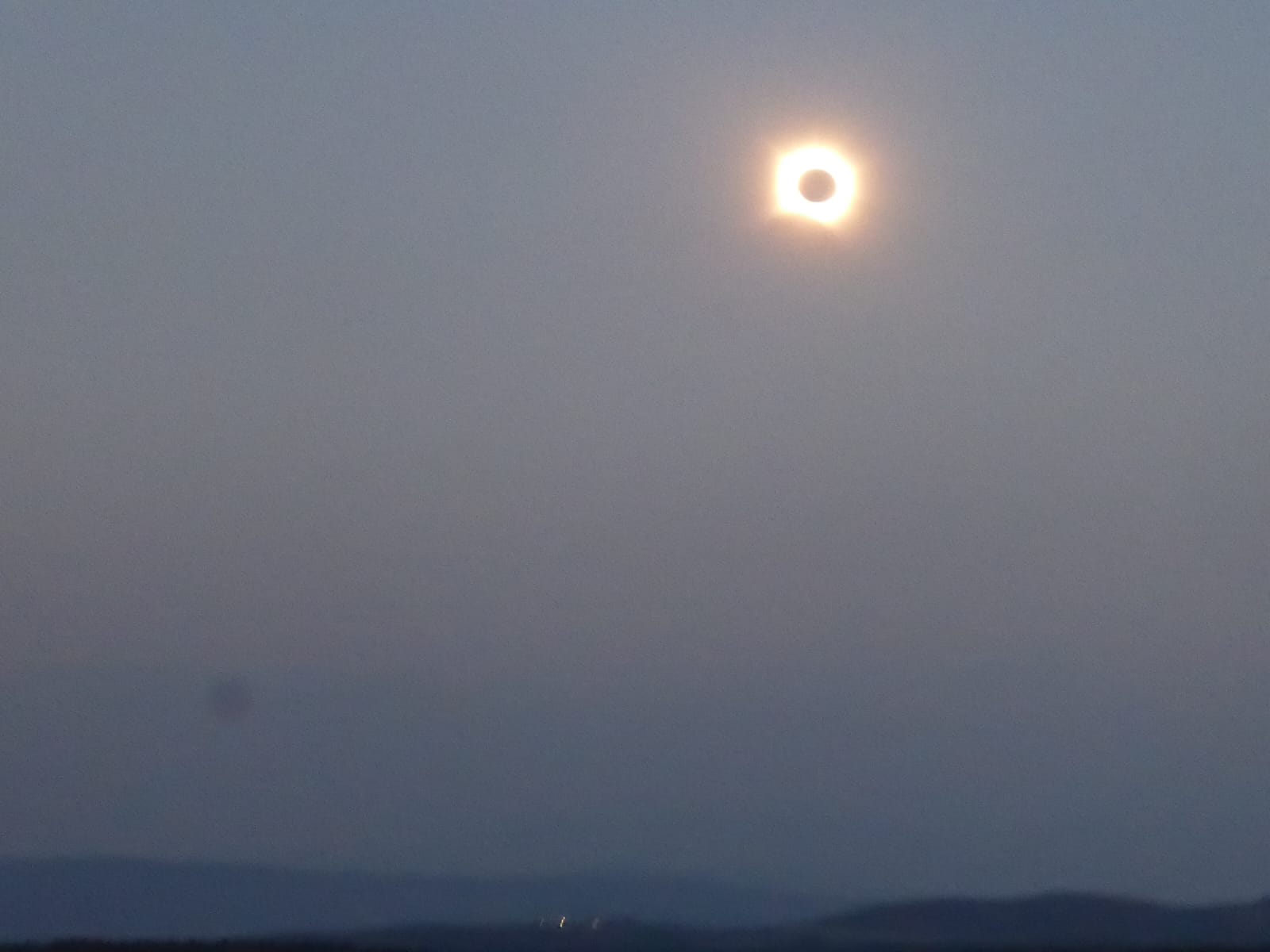
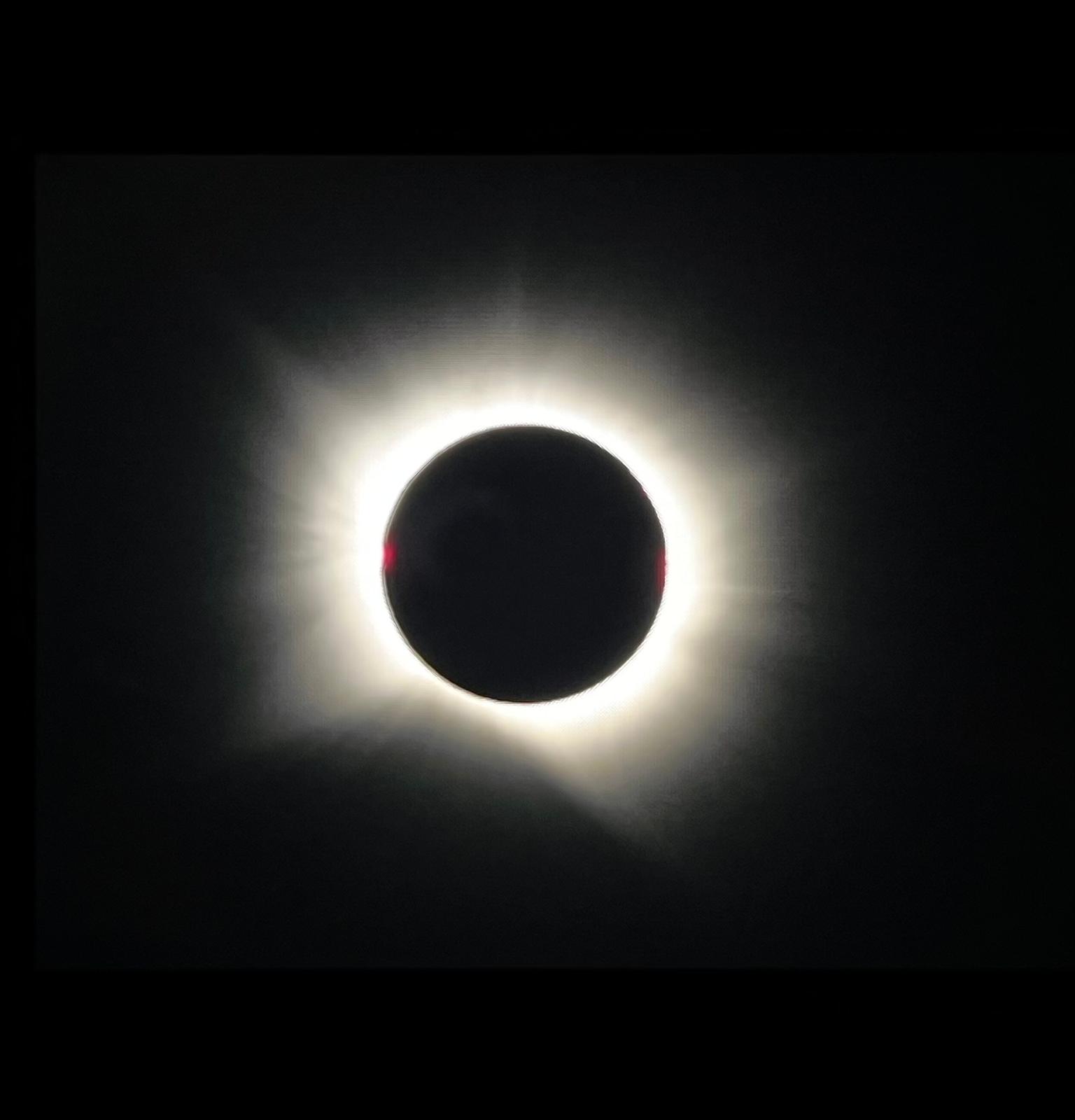
Y entonces llegó el momento que todos estábamos esperando. A las 20:33, comenzó la fase de totalidad.
Es difícil explicar con palabras lo que se siente al contemplar un eclipse total de Sol desde un lugar como Peña Nava. La luz fue desapareciendo progresivamente hasta transformar por completo el paisaje. La temperatura descendió y una oscuridad que parecía imposible para aquella hora de la tarde se apoderó de nuestro alrededor.
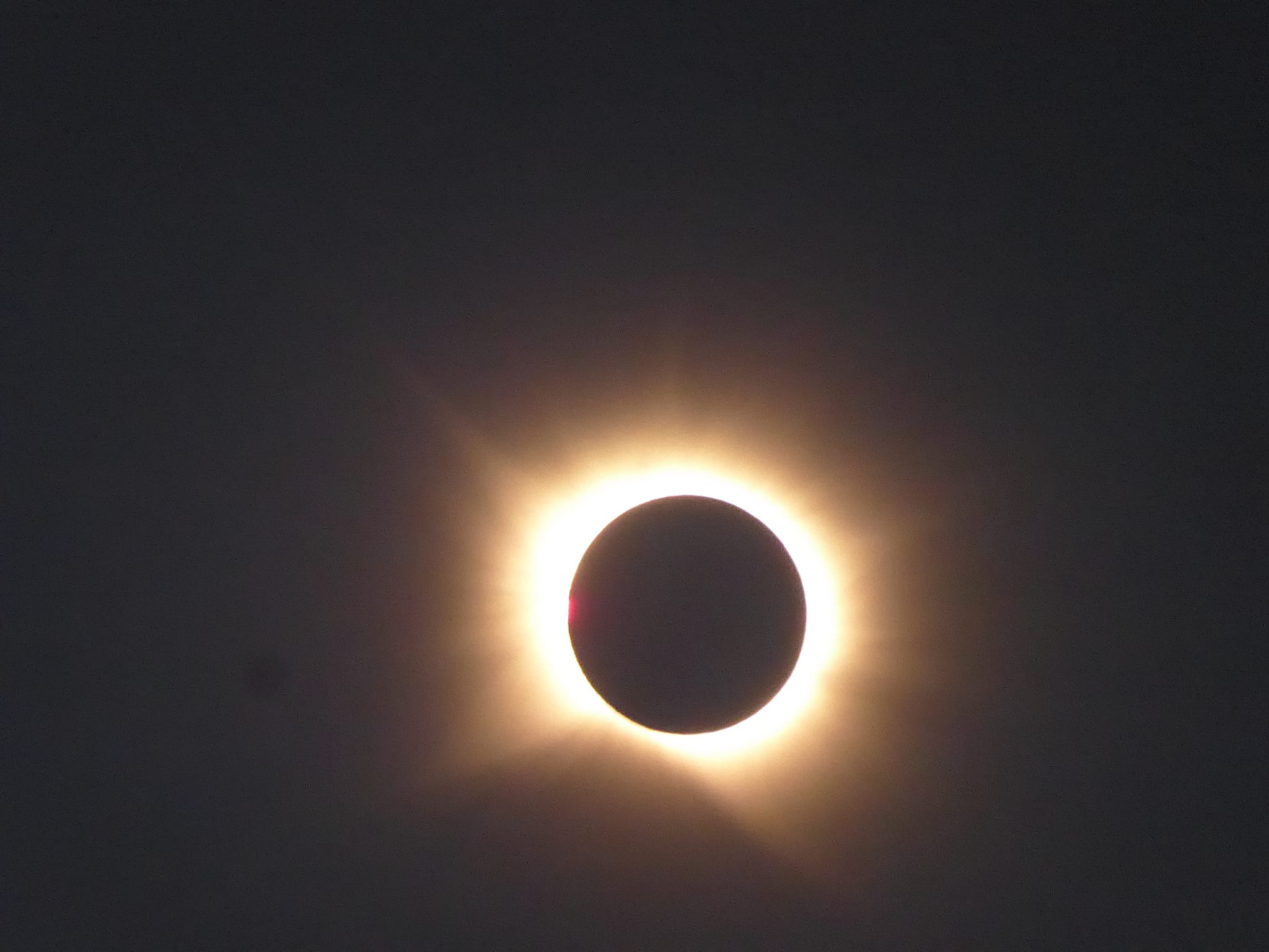
En el cielo apareció Venus, mientras que alrededor del disco negro de la Luna se extendía la delicada corona solar. Pudimos observar también las protuberancias solares, pequeños destellos rojizos que aparecían alrededor del borde lunar.
Durante aquellos instantes, el tiempo pareció detenerse. Fue, sencillamente, espectacular.
Más allá de fotografías, datos y observaciones, quedaba la sensación de haber contemplado uno de esos fenómenos naturales que difícilmente se olvidan.
And then came the moment we had all been waiting for. At 8:33 pm, totality began.
It is difficult to put into words what it feels like to experience a total solar eclipse from a place such as Peña Nava. The light gradually disappeared, completely transforming the landscape around us. The temperature dropped, and an almost unbelievable darkness descended over the countryside at that early hour of the evening.
Venus appeared in the darkened sky, while around the black disc of the Moon we could see the delicate solar corona. We were also able to observe the solar prominences, appearing as vivid pinkish-red flashes around the edge of the Moon.
For those few moments, time seemed to stand still. It was, quite simply, spectacular.
Beyond the photographs, the observations and all the technical details, what remained was the feeling of having witnessed one of those extraordinary natural phenomena that are almost impossible to forget.
Del eclipse al atardecer / From Eclipse to Sunset
Tras la totalidad, el Sol volvió a aparecer poco a poco y comenzó la última fase del eclipse.
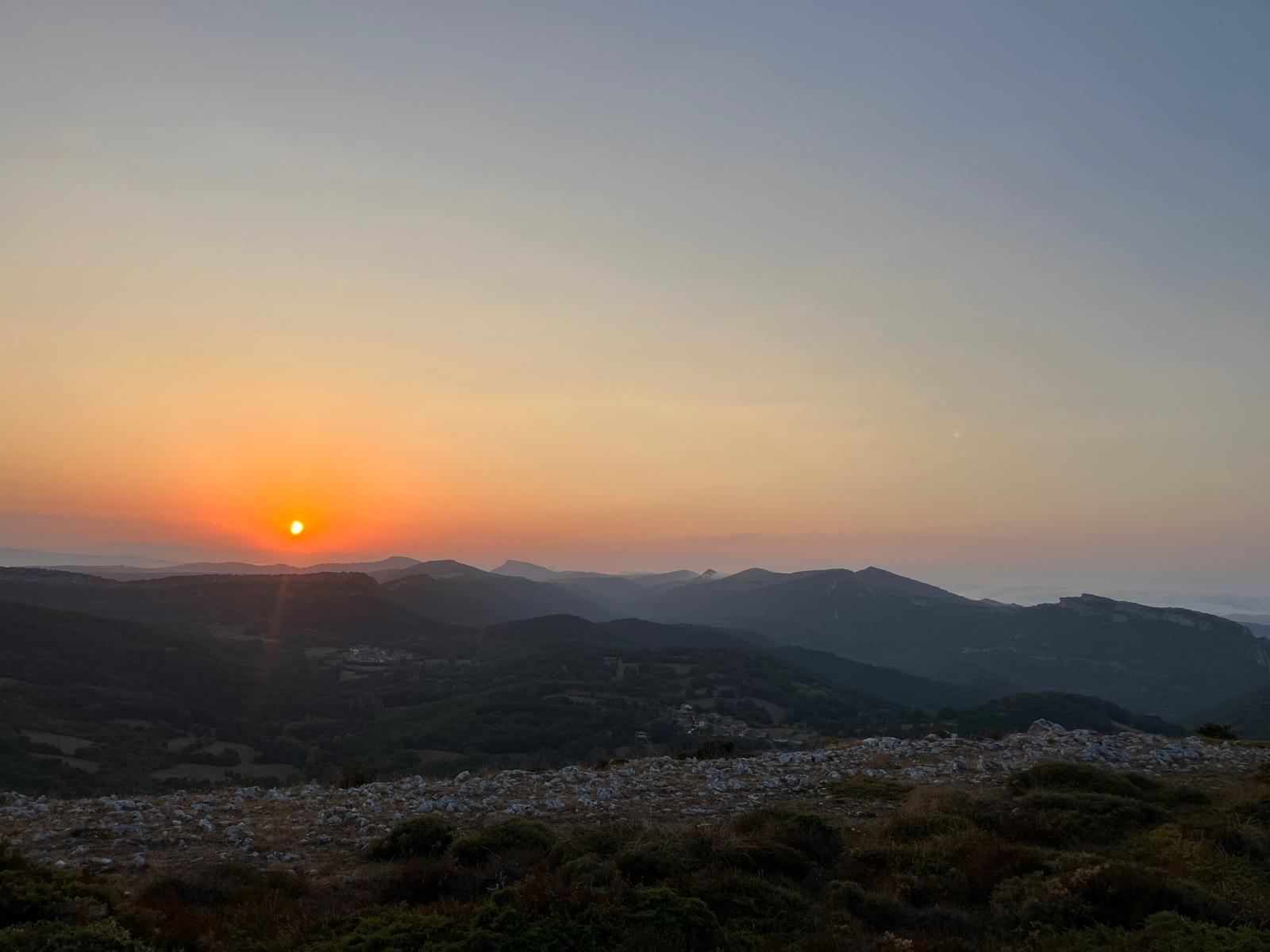
Y esta vez el espectáculo fue diferente, pero igualmente hermoso. El Sol, ya parcialmente descubierto, descendía hacia el horizonte convertido en un intenso disco rojizo, atravesando algunas nubes bajas. Un atardecer que, en cualquier otra circunstancia, habría sido ya un magnífico final para la jornada, pero que después de un eclipse total adquiría un significado especial.
After totality, the Sun gradually reappeared and the final phase of the eclipse began.
This time the spectacle was different, but no less beautiful. The partially eclipsed Sun descended towards the horizon as an intense reddish disc, passing through some low clouds. Under normal circumstances, that sunset alone would have been a magnificent ending to the day. After experiencing a total eclipse, however, it seemed even more special.

Poco a poco, la luz fue desapareciendo definitivamente y comenzó a aparecer la cúpula de estrellas.
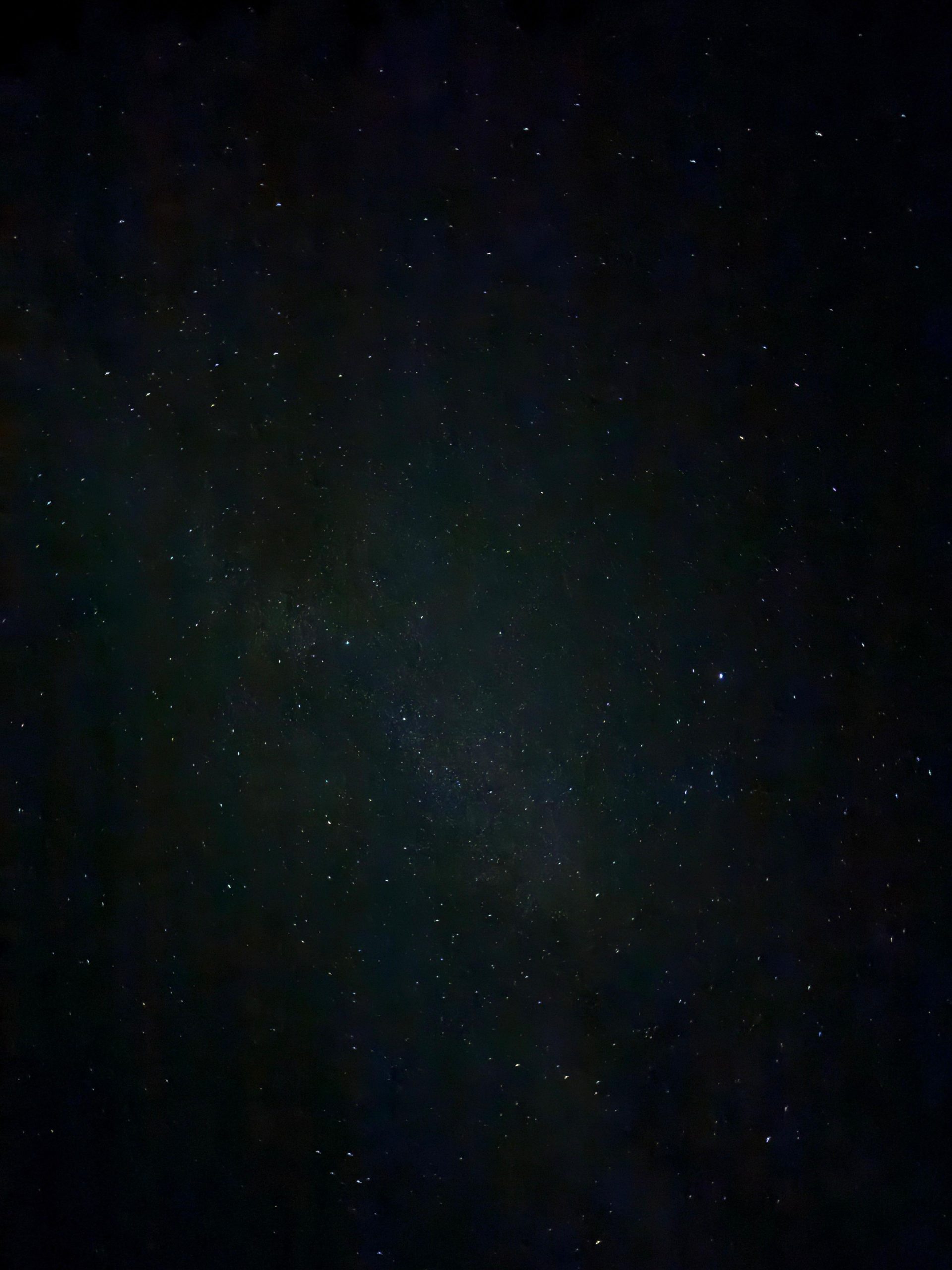
La Vía Láctea empezó a hacerse visible sobre nuestras cabezas y, como no podía ser de otra manera en estas fechas, las Perseidas pusieron el broche final. Desde la zona de Perseo fueron apareciendo varias estrellas fugaces, algunas de ellas realmente espectaculares por su tamaño y brillo, cruzando el cielo nocturno.
Parecía que el cielo no quería que termináramos la jornada.
Slowly, the remaining daylight disappeared and the dome of stars began to emerge.
The Milky Way gradually became visible overhead and, as if the sky had planned one final performance for us, the Perseids provided the perfect finale. Several shooting stars appeared from the direction of Perseus, some of them remarkably large and bright, streaking across the night sky.
It seemed that the sky simply did not want the day to end.
El regreso a la Posada / Back to the Posada
Finalmente llegó el momento de recoger el material y emprender el regreso.
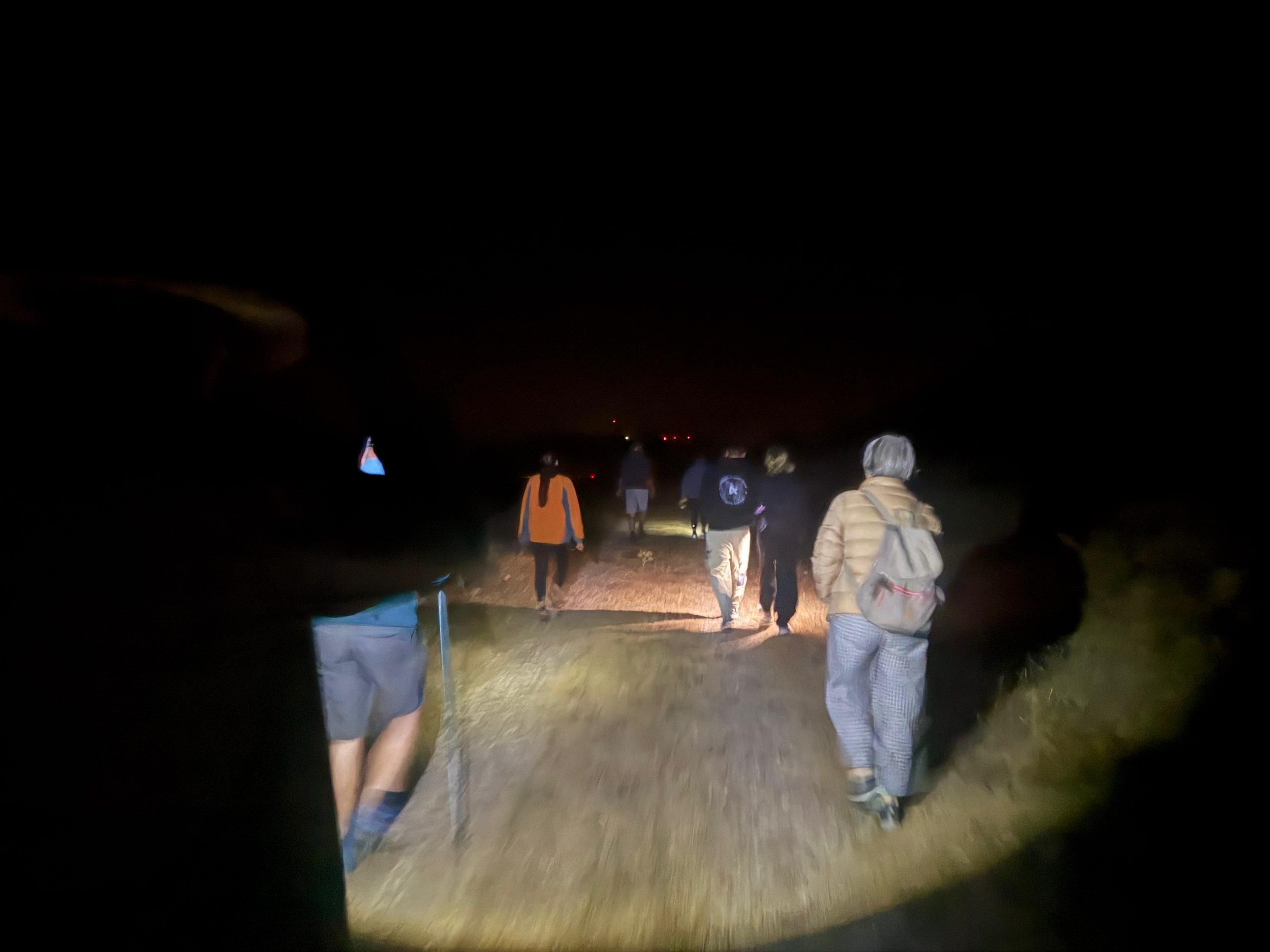
Esta vez sí, caminando hasta la Posada, disfrutando de un agradable paseo nocturno bajo un cielo completamente despejado. Y todavía hubo tiempo para alguna última observación: durante el camino, alguien pudo incluso disfrutar de la presencia de algún cárabo.
Eventually, it was time to pack up the equipment and head back.
This time, we walked back to the Posada, enjoying a pleasant nighttime stroll beneath a completely clear sky. And there was even time for one last wildlife encounter: along the way, someone was lucky enough to spot a Tawny Owl.
Así terminó una jornada extraordinaria, que había comenzado entre aves, valles y páramos y que acabó bajo la Vía Láctea, después de haber contemplado uno de los fenómenos astronómicos más impresionantes que pueden observarse desde la Tierra.
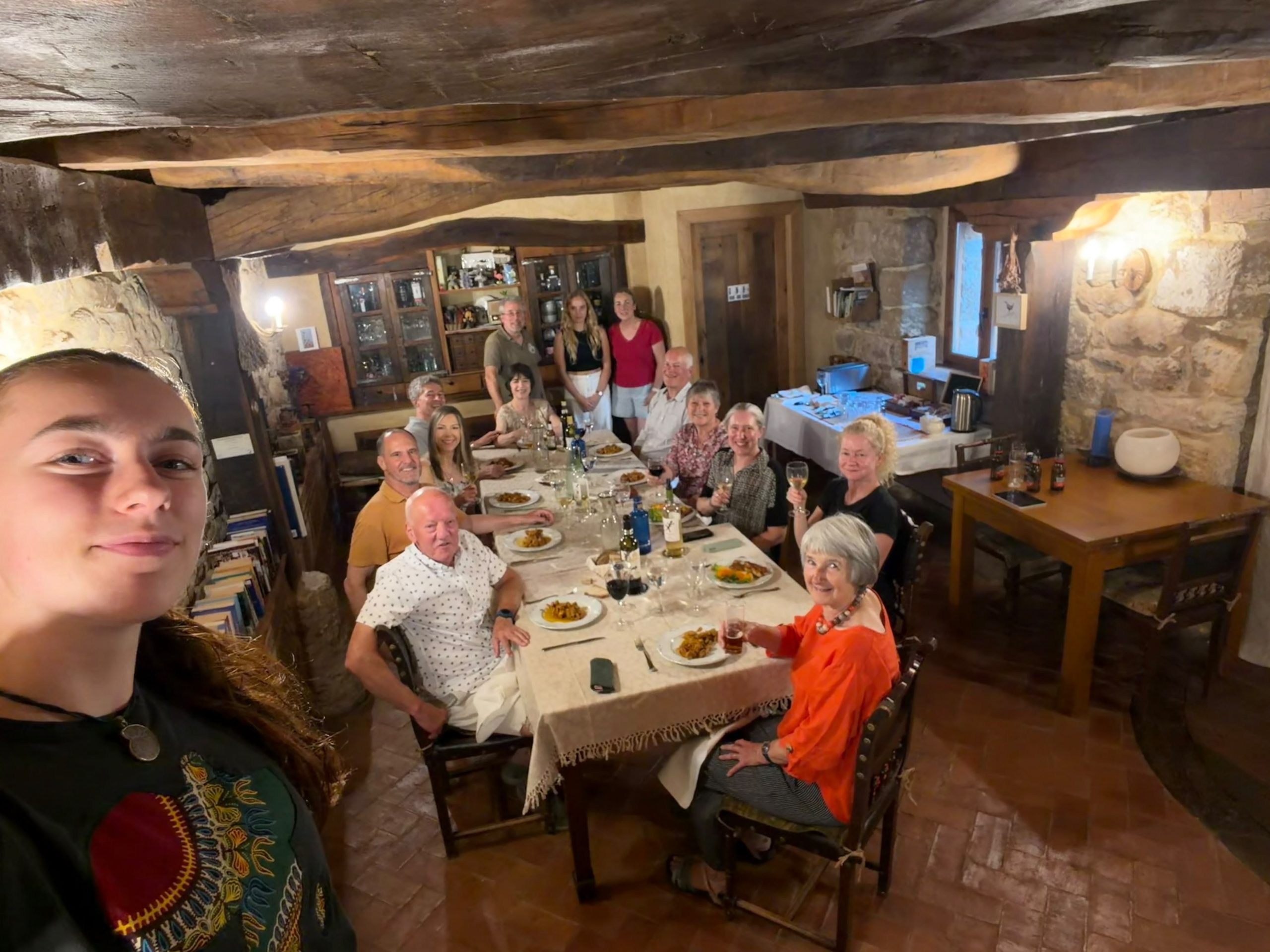
El eclipse del 12 de agosto de 2026 quedará como uno de esos días difíciles de describir y, sobre todo, imposibles de olvidar, no solo por el extraordinario espectáculo que tuvimos la suerte de contemplar, sino también por la maravillosa compañía de las personas que lo compartieron con nosotros. Las risas, las conversaciones, la emoción compartida y esos momentos tan especiales vividos juntos hicieron que la experiencia fuera aún más agradable y verdaderamente inolvidable.
And so ended an extraordinary day —a day that had begun among birds, valleys and high plateaus and ended beneath the Milky Way, after witnessing one of the most spectacular astronomical phenomena visible from Earth.
The eclipse of 12 August 2026 will remain one of those days that are difficult to describe and, above all, impossible to forget —not only because of the extraordinary spectacle we witnessed, but also because of the wonderful company of the people who shared it with us. The laughter, conversations, shared excitement and those special moments spent together made the experience even more enjoyable and truly unforgettable.